

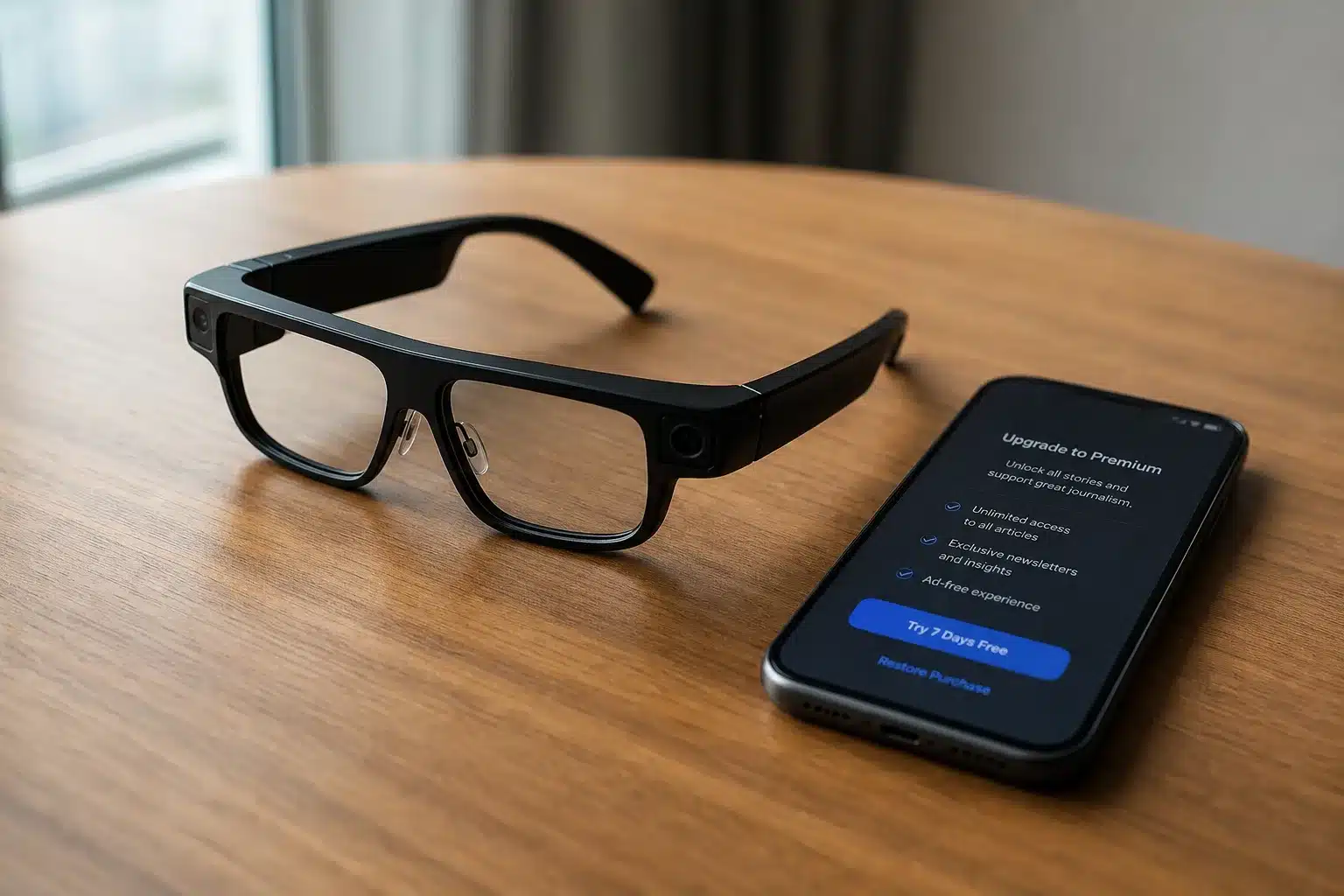
Meta has quietly dropped a decision that’s already drawing widespread backlash from its own customers: the company is placing a hard monthly cap on a Meta Glasses accessibility feature that many buyers may have specifically purchased the hardware to use. And in doing so, Meta may have handed Apple one of the cleanest marketing gifts it’s received in years.
- Meta is capping Meta Glasses accessibility feature Conversation Focus at just 3 hours per month without a paid subscription.
- The Meta Glasses accessibility paywall costs $19.99 per month via Meta One Premium — applied retroactively to hardware already sold.
- Conversation Focus runs entirely on-device, meaning Meta has no server costs to justify charging extra for the feature.
- Apple has publicly committed to never paywalling accessibility features, positioning it strongly ahead of Apple Glasses‘ expected launch in the near future.
Table of Contents
What Meta Just Did to Its Glasses Owners
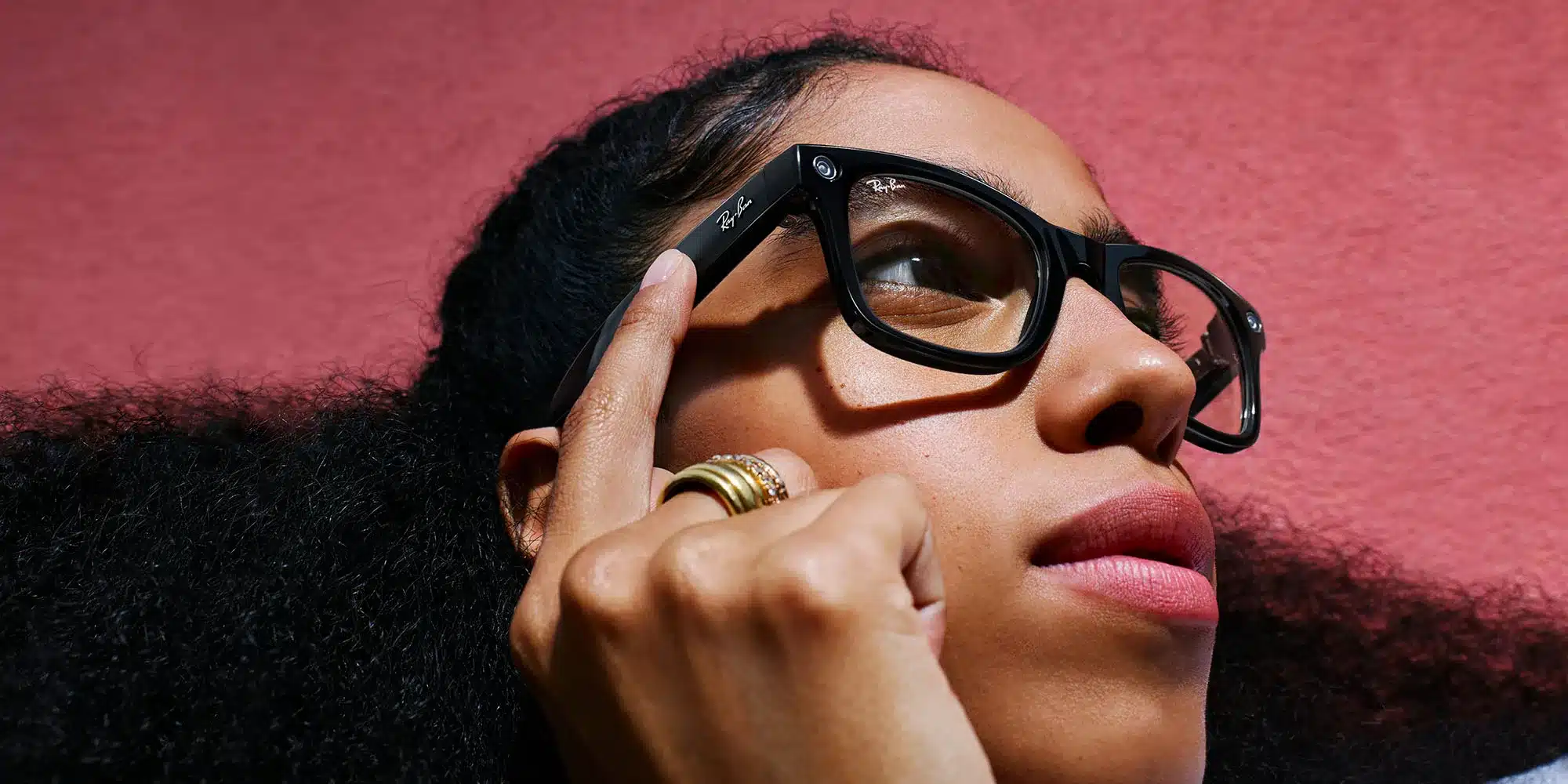
The feature at the centre of this controversy is called Conversation Focus. Introduced in December 2024, it’s one of the more genuinely useful things Ray-Ban Meta Glasses can do — using the glasses’ built-in open-ear speakers to amplify the voice of whoever you’re speaking with, making it easier to follow a conversation in a noisy restaurant, a crowded commute, or any environment where background noise competes with the people around you. Users can adjust the amplification level by swiping the right temple of the frame or through app settings. It’s clever, it’s practical, and for people with mild-to-moderate hearing difficulties, it’s not a gimmick — it’s the reason they bought the product.
This week, as The Verge reported, Meta announced that Conversation Focus will soon be limited to just three hours of use per month unless you subscribe to Meta One Premium at $19.99 a month. Three hours. For context, that’s roughly the length of a single long dinner out with friends. The Meta Glasses accessibility feature — one that runs entirely on-device, requires no server infrastructure, and costs Meta essentially nothing to deliver at scale — is now effectively behind a subscription wall.
Why This Is Harder to Defend Than Most Paywalls
Software subscriptions are everywhere now. We’ve largely made peace with the idea that ongoing cloud services cost money to run. What makes the Meta Glasses accessibility situation different — and what’s driving the “ridiculous” label circulating online — is the specific nature of this feature.
As The Verge’s Sean Hollister pointed out bluntly: because Conversation Focus processes everything on the device itself, Meta is not running any backend infrastructure to support it. There are no servers being pinged, no AI inference costs being racked up in a data centre, no bandwidth being consumed. The compute happens entirely within the glasses. That means the standard justification for usage-based pricing — ‘we have real costs on our end’ — simply doesn’t apply here. Meta is charging a recurring fee for a feature that, once developed, costs the company essentially nothing per use.
That alone would be enough to draw criticism. But the second issue cuts deeper: this is a Meta Glasses accessibility feature in the truest sense of the term. People don’t use Conversation Focus because it’s a fun extra. They use it because it meaningfully improves their ability to participate in everyday social situations. Retroactively placing a three-hour monthly limit on that — after the hardware has already been sold, often at a price justified in part by those AI capabilities — is a different category of decision to locking a novelty feature behind a paywall.
When Meta was pressed for comment, the company’s response was telling. A spokesperson confirmed the limit “currently” applies only to Conversation Focus — a word choice that strongly implies other AI features could face similar rate-limiting in the future. That’s not reassurance. That’s a warning.
The Meta Glasses Accessibility Problem in a Broader Context
Meta’s smart glasses push has been genuinely impressive from a hardware standpoint. The Ray-Ban Meta collaboration produced frames that people actually want to wear — a problem that torpedoed Google Glass over a decade ago and has tripped up almost every attempt at mainstream smart eyewear since. Pricing has also been aggressive, and Meta has since introduced cheaper non-designer options to widen the market. For a while, the value proposition was strong.
But the Meta Glasses accessibility paywall decision puts that value proposition under new scrutiny. If the features that differentiate these glasses from ordinary eyewear — the AI capabilities that Meta has leaned on heavily in its marketing — start disappearing behind subscription tiers, the calculus changes. Buyers who stretched their budget for a pair of AI-powered glasses are now discovering the AI comes with strings attached. And those strings are getting shorter.
This also reflects a tension running through the entire consumer AI hardware space right now. Companies are struggling to build sustainable revenue models around devices whose primary selling point is software intelligence. The hardware margin alone rarely justifies the R&D investment. So subscriptions become attractive — but when you try to retrofit them onto products people already own and paid for in full, you’re on legally and ethically shaky ground. The glasses were sold with these features. Limiting them later isn’t an upgrade tier — it’s a downgrade dressed up as one. For users who relied on Meta Glasses accessibility functions as part of their daily routine, that distinction matters enormously.
Why Meta Glasses Accessibility Troubles Could Help Apple
Apple Glasses have been rumoured, teased, and debated for years. The current best estimate puts a launch sometime in the near future, though Apple hasn’t confirmed anything officially. When they do arrive, they’re widely expected to carry a significant price premium over Meta’s offerings — that’s just how Apple hardware pricing works, and smart glasses won’t be different.
That price gap has always been Meta’s strongest argument. Why pay Apple’s premium when Ray-Ban Meta does most of the same things for a fraction of the cost? It’s a reasonable question — or it was.
Apple has a consistent, long-standing position on accessibility that stands in direct contrast to what Meta just did. The company has explicitly said it doesn’t seek a return on investment from accessibility features — it treats them as an obligation, a contribution to broader societal good rather than a product line to be monetised. That’s not marketing spin; it’s a position Apple has held and, so far, demonstrated through product decisions. VoiceOver, Live Captions, Sound Recognition, Door Detection — these features exist across Apple’s product range and have never been paywalled.
If Apple Glasses launch with comparable hearing-assistance or ambient-audio features — and given Apple’s existing work on hearing health with AirPods Pro, that seems likely — the company has a ready-made contrast to draw. It doesn’t even have to say Meta’s name. Any consumer who has followed the Meta Glasses accessibility controversy will immediately understand the comparison.
There’s a larger point here about brand trust in the hardware-plus-subscription era. Consumers are increasingly wary of buying hardware that depends on a company’s ongoing goodwill to remain fully functional. Meta’s decision reinforces that wariness. Apple — whatever its other flaws — has built a reputation for not rug-pulling customers on core device functionality after purchase. In a market where that trust is becoming a genuine differentiator, Meta just made Apple’s sales pitch easier to land.
The smart glasses race is still wide open. Meta has a real head start in terms of adoption, design, and price accessibility. But trust, once lost, is expensive to recover — and for users who bought Ray-Ban Meta frames specifically because of the Meta Glasses accessibility features they offered, this week’s announcement may have permanently changed how they think about the brand.
Frequently Asked Questions
What is the Meta Glasses accessibility feature being paywalled?
The feature is called Conversation Focus. It uses the open-ear speakers on Ray-Ban Meta Glasses to amplify the voice of whoever you’re talking to, helping people distinguish speech from background noise. Meta is now limiting free use to three hours per month.
How much does Meta One Premium cost to unlock full Conversation Focus access?
Meta One Premium is priced at $19.99 per month. Without it, Meta Glasses users will be capped at three hours of Conversation Focus usage each month — a limit applied retroactively to glasses already purchased.
Why can’t Meta justify charging for the Meta Glasses accessibility feature?
Because Conversation Focus uses entirely on-device processing — no Meta servers are involved, no mobile data is consumed, and there are no running costs for Meta to pass on. Critics argue this makes the paywall commercially indefensible.
When are Apple Glasses expected to launch?
Apple Glasses are expected to launch at some point next year, though no official release date has been confirmed. Apple has previously stated it does not seek a return on investment for accessibility features, viewing them as a way to contribute to a better world.

