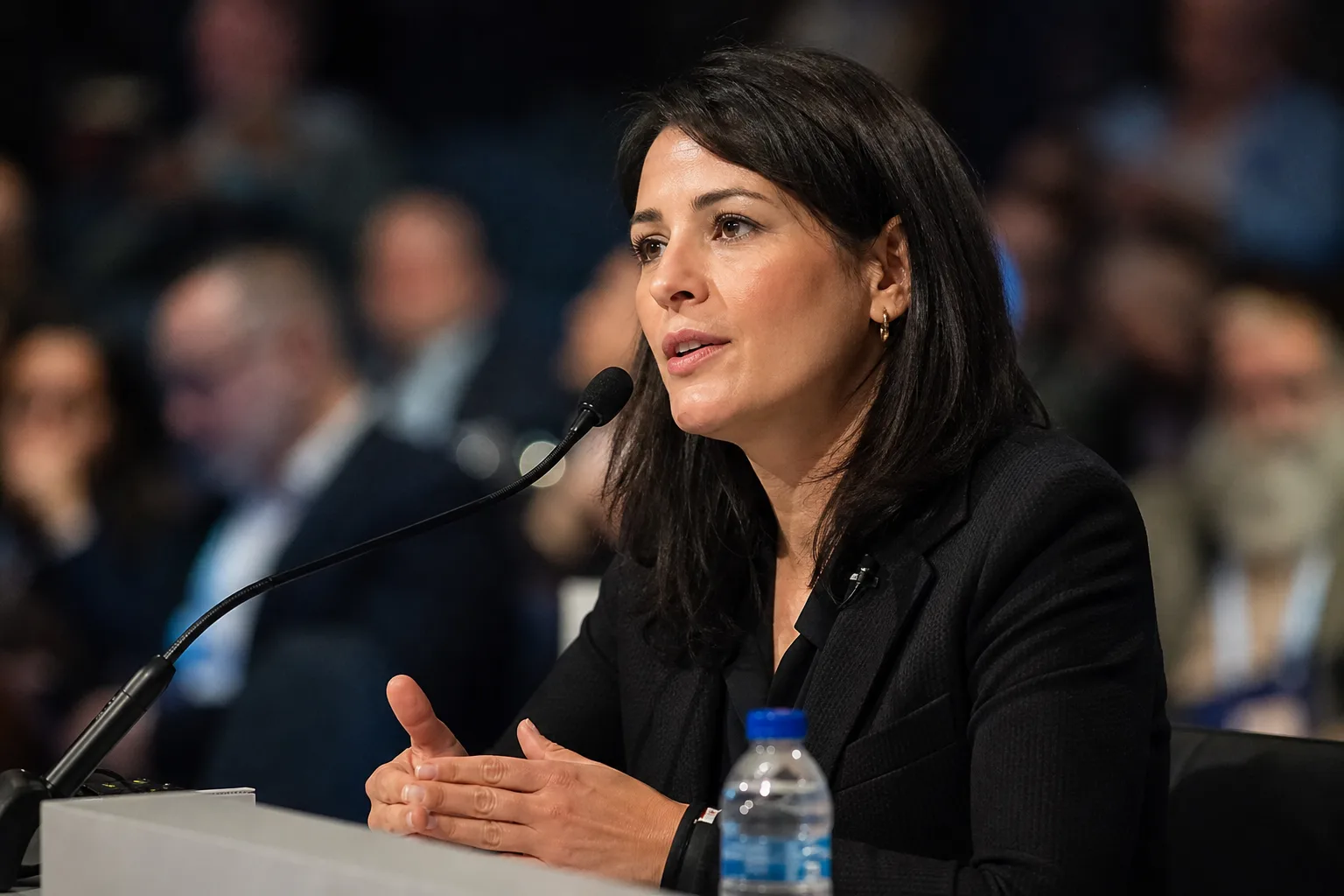
- Mira Murati made her first major public appearance in 18 months, previewing a new kind of AI interface called interaction models.
- Mira Murati said OpenAI would have imploded during the Sam Altman firing crisis without her direct involvement.
- Thinking Machines Lab has been quietly building since late 2023, shipping one product — Tinker, an API for fine-tuning open-source AI models.
- Murati warned that structural governance failures, not just individual bad actors, are the biggest risk facing the AI industry today.
Table of Contents
Mira Murati Steps Back into the Room
Mira Murati has never been the kind of person who craves the spotlight. In her six years as CTO at OpenAI, she was a steady presence in the background — trusted, respected, rarely the loudest voice in the room. Since leaving to found Thinking Machines Lab in late 2023, she’s been even quieter. So when Mira Murati sat down with Bloomberg’s Emily Chang in San Francisco last Thursday — her first substantial media appearance in roughly 18 months — the AI world paid attention, even if what she said was measured, deliberate, and often more interesting for what it left unsaid.
The timing wasn’t accidental. Thinking Machines has spent the better part of a year and a half with its head down: raising capital, assembling a research team, and quietly shipping its first product, Tinker — an API that lets developers fine-tune open-source AI models. That’s a real product, but it’s not a headline. In the meantime, every competitor in the space has been consuming oxygen at an extraordinary rate. OpenAI is a permanent fixture in the news cycle. Anthropic’s momentum is the talk of enterprise AI right now. And xAI, Elon Musk’s operation, just got folded into SpaceX ahead of what’s shaping up to be a colossal IPO, creating its own gravitational pull on capital and talent. At some point, even the most focused founders have to remind the market they’re still in the game.
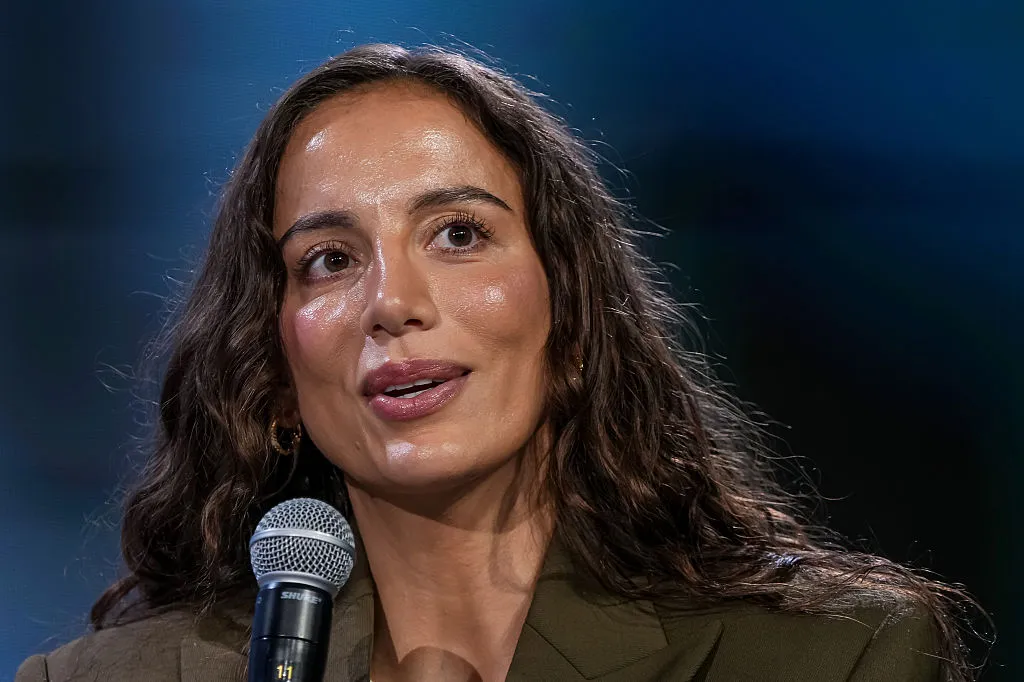
Interaction Models: A Different Kind of AI Interface
The centrepiece of the Bloomberg interview was Mira Murati’s preview of what Thinking Machines is calling “interaction models” — and if the concept holds up, it represents a genuinely different design philosophy from what the rest of the industry is building. Most AI products today work on a turn-based loop: you type a prompt, the model generates a response, you react, repeat. It’s functional, but it doesn’t reflect how humans actually communicate. We interrupt. We trail off. We correct ourselves mid-sentence. We pause to think, and the pause itself carries meaning.
Murati told Chang that Thinking Machines’ models are designed to process continuous, interleaved streams of audio, text, and video in 200-millisecond intervals. The goal is something closer to real-time understanding — a system that can read the rhythm and texture of a conversation, not just its literal content. That’s an ambitious technical target, and it’s worth comparing it to what other labs have attempted. OpenAI’s voice mode in ChatGPT and Google’s Project Astra have both gestured at continuous interaction, but neither has fully cracked naturalness at scale. The question of whether Thinking Machines has something meaningfully different — or whether this is well-articulated vision still waiting for the engineering to catch up — is one Mira Murati was careful not to answer fully. She framed this as a first step, declined to commit to a release date, and didn’t share benchmark data. Smart. Overpromising is how you lose credibility in a field full of overpromises.
On the Week That Changed Everything
No interview with Mira Murati can avoid the five days in November 2023 that briefly made her the most scrutinised person in tech. When OpenAI’s board abruptly fired Sam Altman, Mira Murati became interim CEO almost overnight — thrust into a crisis she didn’t engineer but had to navigate. Inside OpenAI, those days came to be referred to, with some dark humour, as “the blip.”
Her account, delivered calmly to Chang, was the most detailed she’s given publicly. She said she felt clear about her decisions in each moment — that keeping the mission intact and the team together gave her a through-line when the situation was visibly unravelling from the outside. More strikingly, she said that without her involvement, OpenAI would have “imploded.” That’s a strong claim, and almost certainly true. The mass resignation threat that followed Altman’s firing was real; Mira Murati was one of the anchoring forces that kept the organization from fracturing entirely before Altman was reinstated.
But she also offered a more self-critical take. Clarity about what she was trying to do in the moment, she acknowledged, isn’t the same as clarity about what the consequences would be. Looking back, Mira Murati said she’d have pushed harder for more information, a better transition plan, and more transparency throughout. She didn’t say whether she thinks the overall outcome was good. And when Chang asked directly whether she still trusts Sam Altman, Murati sidestepped — smoothly, but unmistakably.
Mira Murati on Governance: The Problem Nobody Wants to Fix
What Mira Murati was more willing to address directly was the structural problem she thinks the whole industry is getting wrong. Her concern, she said repeatedly, isn’t primarily about whether the people running AI companies are good or bad people — though she acknowledged that character matters. The deeper issue is the absence of real structural checks on decision-making. Good people make bad calls. Well-intentioned organisations drift in directions nobody planned. And right now, decisions with enormous societal implications are being concentrated in very few hands, with very little external accountability.
This is actually a more pointed critique than it sounds. The AI industry has spent considerable energy on virtue signalling — mission statements about safety, responsible scaling policies, internal ethics teams — while simultaneously moving faster than any regulatory framework can track. Murati’s argument, essentially, is that virtue without governance is insufficient. You can’t design a safe system around the hope that the people at the top will always make the right call. That’s not how any other high-stakes industry operates, and it’s not how this one should either. Coming from someone who was inside OpenAI’s leadership structure during one of its most consequential internal failures, this reads less like abstract philosophising and more like a lesson drawn from direct experience.
The Staff Departures and the Competitive Reality
Chang also pressed Mira Murati on the departures of several notable researchers from Thinking Machines in recent months — a subject she’s largely avoided and continued to downplay on Thursday. Her explanation had two parts. First, she said, building a frontier AI lab from scratch compresses what would normally be years of organisational churn into a matter of months. Hiring mistakes get made faster. Culture mismatches surface sooner. That’s not wrong — early-stage research organisations are genuinely volatile, and turnover at this stage isn’t automatically a signal of dysfunction.
The second part was more candid. She acknowledged that compensation — the nine-figure packages that have become the standard opening bid in the AI talent war — captures people’s attention. But she suggested money rarely tells the complete story of why someone leaves. What she didn’t say is what the rest of the story is in this case, which leaves the audience to draw its own conclusions. Still, her line about competitive instincts got a laugh from the room: “When I wake up in the morning, I am not thinking about how to kill the competitor.” Funny, relatable, and also — notably — not a denial that competition is real.
The Bigger Question: Who Controls the Wheel?
Chang closed with the question every AI leader gets asked eventually: what about the humans? The AI industry spent several years evangelising about empowerment and augmentation. More recently, the tone has shifted — job displacement is discussed more openly, and fears about misuse, from disinformation to bioweapons, have moved from the fringe to mainstream policy conversations.
Mira Murati, who was born in Albania and has lived the experience of building a career in a field that didn’t exist when she was growing up, pushed back on both the utopian and dystopian framings. Neither future is inevitable, she argued. The period we’re in right now — messy, fast, under-governed, full of competing incentives — is actually the one that will determine the shape of what comes next. That’s not a comforting thought, but it’s an honest one. And the note she kept returning to throughout the interview was this: if humans step back from meaningful control too soon, the future will look very different, and not in the ways the optimists are promising.
For a founder who’s spent 18 months deliberately staying out of the conversation, Mira Murati managed to say quite a lot without giving away very much. Thinking Machines is still a largely opaque organisation with one public product, a research agenda it’s keeping close, and a founder who clearly has strong views about where the industry is heading — and stronger views still about how it’s currently being run. The interaction models preview suggests there’s real product ambition underneath the silence. Whether Thinking Machines can translate that into something that competes with the scale of OpenAI or Anthropic is the question that will define the next chapter. And if this interview is any indication, we probably won’t get a clear answer until Mira Murati is ready to give one.