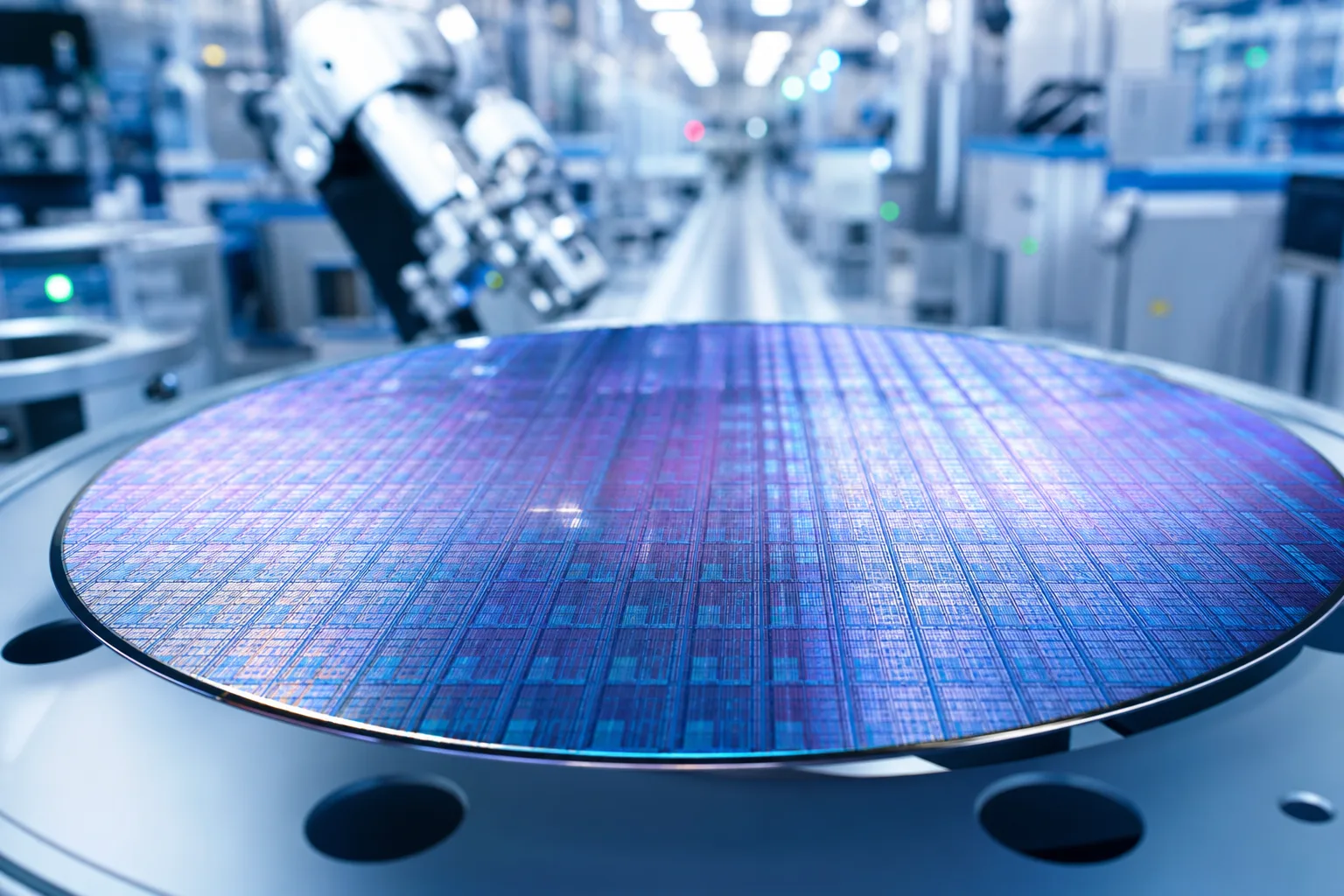
- TSMC says the AI chip shortage will persist for several more years as demand from AI workloads vastly outpaces production capacity.
- The AI chip shortage is being driven by surging orders from hyperscalers and AI firms, stretching TSMC’s most advanced nodes to their limits.
- Advanced packaging technology like CoWoS has emerged as a critical bottleneck slowing TSMC’s ability to scale AI chip output.
- TSMC is investing heavily in new fabs across Taiwan, Arizona, and Japan, but new capacity won’t arrive fast enough to ease near-term pressure.
Table of Contents
The AI Chip Shortage Isn’t a Blip — TSMC Says It’s Structural
The AI chip shortage is not a supply chain hiccup that’ll resolve itself in a couple of quarters. That’s the message coming from TSMC, the Taiwanese semiconductor giant that manufactures chips for virtually every major player in the AI race — from NVIDIA and AMD to Apple and Qualcomm. According to TSMC’s leadership, demand for advanced AI chips is so far ahead of the industry’s ability to produce them that the gap will take years, not months, to close.
This is a significant statement from a company that sits at the center of the global chip ecosystem. TSMC doesn’t just make chips — it makes the chips that make AI possible at scale. Its 3nm and 5nm process nodes are the manufacturing backbone for the AI accelerators powering data centers from Virginia to Singapore. When TSMC says supply is going to remain tight, the rest of the industry listens.
What’s driving this? The short answer is that the AI buildout happening right now is unlike anything the semiconductor industry has seen before in terms of speed and scale. Hyperscalers — think Microsoft, Google, Amazon, and Meta — are spending tens of billions of dollars per year on AI infrastructure, and a huge chunk of that spending flows directly to TSMC’s most advanced nodes. NVIDIA’s H100 and Blackwell-series GPUs, the workhorses of AI training and inference, are all TSMC-manufactured products. Demand for those chips has been, by most accounts, overwhelming — and that sustained demand is precisely why the AI chip shortage shows no sign of easing on its own.
Why Advanced Packaging Is the Hidden Bottleneck
It’s tempting to frame the AI chip shortage purely as a fabrication problem — not enough wafer capacity, not enough advanced nodes. But the reality is more complicated. One of the most significant constraints right now is in advanced packaging, specifically a technology called CoWoS, or Chip-on-Wafer-on-Substrate.
CoWoS allows chipmakers to stack high-bandwidth memory directly alongside logic chips in a single package — a configuration that’s essentially mandatory for the kind of memory-hungry AI workloads that large language models demand. NVIDIA’s H100, for instance, uses CoWoS packaging to marry its GPU dies with HBM3 memory stacks. Without that packaging step, the chip simply can’t perform at the level AI applications require.
TSMC has been expanding its CoWoS capacity aggressively, but it’s been playing catch-up almost since the AI boom began in earnest following the launch of ChatGPT in late 2022. Building advanced packaging capacity isn’t as immediately scalable as spinning up additional fab lines — it requires specialized equipment, tooling, and a workforce trained in highly specific processes. That’s a slow machine to accelerate, and it means the AI chip shortage has a packaging dimension that is just as stubborn as the wafer supply problem.
Building New Fabs Takes Time the Market Doesn’t Have
TSMC is not sitting still. The company has committed to an extraordinary global expansion, with major fab projects underway in Arizona, Japan, and Germany, and continued investment in its home base in Hsinchu and Tainan. The Arizona fabs in particular have attracted enormous political attention, with the US CHIPS Act directing billions of dollars in subsidies toward domestic semiconductor manufacturing.
But here’s the problem: building a semiconductor fab from groundbreaking to first wafer output typically takes three to five years. Even with the urgency of the AI moment, physics and engineering don’t compress that timeline by much. The fabs being announced and built today will start producing chips toward the end of the decade. That’s not the relief valve the market needs right now.
Meanwhile, demand isn’t waiting. Every major AI lab is in a race to train larger, more capable models. Every cloud provider is under pressure from enterprise customers to deliver more AI compute. Every nation with ambitions in AI is trying to secure chip supply. The result is a demand curve that keeps inflecting upward while supply moves in a slow, capital-intensive arc. In that environment, the AI chip shortage becomes a persistent structural condition rather than a temporary imbalance.
Who Feels the Squeeze Most?
The companies most immediately affected by the AI chip shortage are the ones building and operating large-scale AI infrastructure. Smaller AI startups that can’t lock in supply agreements with NVIDIA or AMD are often forced to wait months for hardware — or pay significant premiums on secondary markets. Even the largest cloud providers have acknowledged constrained GPU availability in their public filings and earnings calls.
For enterprises trying to build AI capabilities, this creates a two-tier reality. Those with existing relationships and purchasing power — the Microsofts, Googles, and Amazons of the world — can secure supply, even if it’s expensive. Everyone else is working around the edges, using older-generation hardware, relying more heavily on cloud access rather than on-premise deployment, or simply waiting.
There’s also a geopolitical dimension that can’t be ignored. US export controls have significantly restricted the flow of advanced AI chips to China, which means Chinese AI developers are effectively locked out of the global supply chain for the most capable hardware. That’s putting pressure on domestic Chinese chip development — companies like Huawei and a cluster of state-backed chipmakers are working to fill that gap — but it also removes a chunk of demand from the global market, which in theory should ease pressure slightly for everyone else. In practice, the remaining demand is still more than enough to strain supply.
What This Means for the Broader Industry
TSMC’s warning about a multi-year AI chip shortage has real implications beyond just hardware procurement headaches. It’s a signal that the AI infrastructure buildout is genuinely structural — this isn’t speculative investment that might evaporate if a bubble pops. Companies are committing to multi-year capital expenditure plans premised on continued AI chip demand, and TSMC’s order books reflect that.
It also reinforces why semiconductor manufacturing has become one of the most strategically important industries on the planet. Governments that once viewed chip policy as a niche industrial concern are now treating it as national security infrastructure. The CHIPS Act in the US, the European Chips Act, Japan’s investments in Rapidus, and South Korea’s own semiconductor incentives are all downstream of the same realization: whoever controls advanced chip manufacturing shapes the trajectory of AI development.
For TSMC specifically, sustained shortage conditions are a double-edged reality. On one hand, strong demand and pricing power are good for margins. On the other, the pressure to scale faster than is physically practical creates execution risk. A company that tries to grow too fast in semiconductor manufacturing tends to generate yield problems, equipment delays, and quality issues — none of which TSMC can afford given its role as the linchpin supplier for so much of the industry.
The AI chip shortage, then, is less a crisis to be solved and more a constraint to be managed — for years to come. Companies building AI strategies should plan accordingly: supply will remain tight, costs will stay elevated, and the ability to secure reliable chip access will increasingly separate the leaders from the also-rans in the AI race.
Frequently Asked Questions
How long will the AI chip shortage last according to TSMC?
TSMC has indicated the AI chip shortage will persist for several more years. The company says demand from AI infrastructure is growing faster than its ability to add production capacity at advanced process nodes.
What is causing the AI chip shortage?
The shortage stems from a combination of explosive demand for AI accelerators, limited advanced manufacturing capacity, and bottlenecks in advanced packaging technologies like CoWoS. Building new semiconductor fabs takes years, meaning supply simply can’t respond quickly to demand spikes.
Which companies are most affected by the AI chip shortage?
Companies relying on cutting-edge AI accelerators manufactured by TSMC are feeling the squeeze most acutely. Cloud providers and hyperscalers have reported constrained AI compute availability as demand for AI infrastructure continues to surge.
Is TSMC building new capacity to address the shortage?
Yes. TSMC is expanding its manufacturing capacity across multiple regions alongside continued investment in Taiwan. However, the lengthy timelines involved in fab construction mean meaningful capacity relief is still some way off.
What is CoWoS and why does it matter for AI chips?
Chip-on-Wafer-on-Substrate (CoWoS) is an advanced packaging technology that TSMC uses to stack memory and logic chips together in high-performance AI packages. Current CoWoS capacity has been a notable production bottleneck contributing to the overall AI chip shortage.