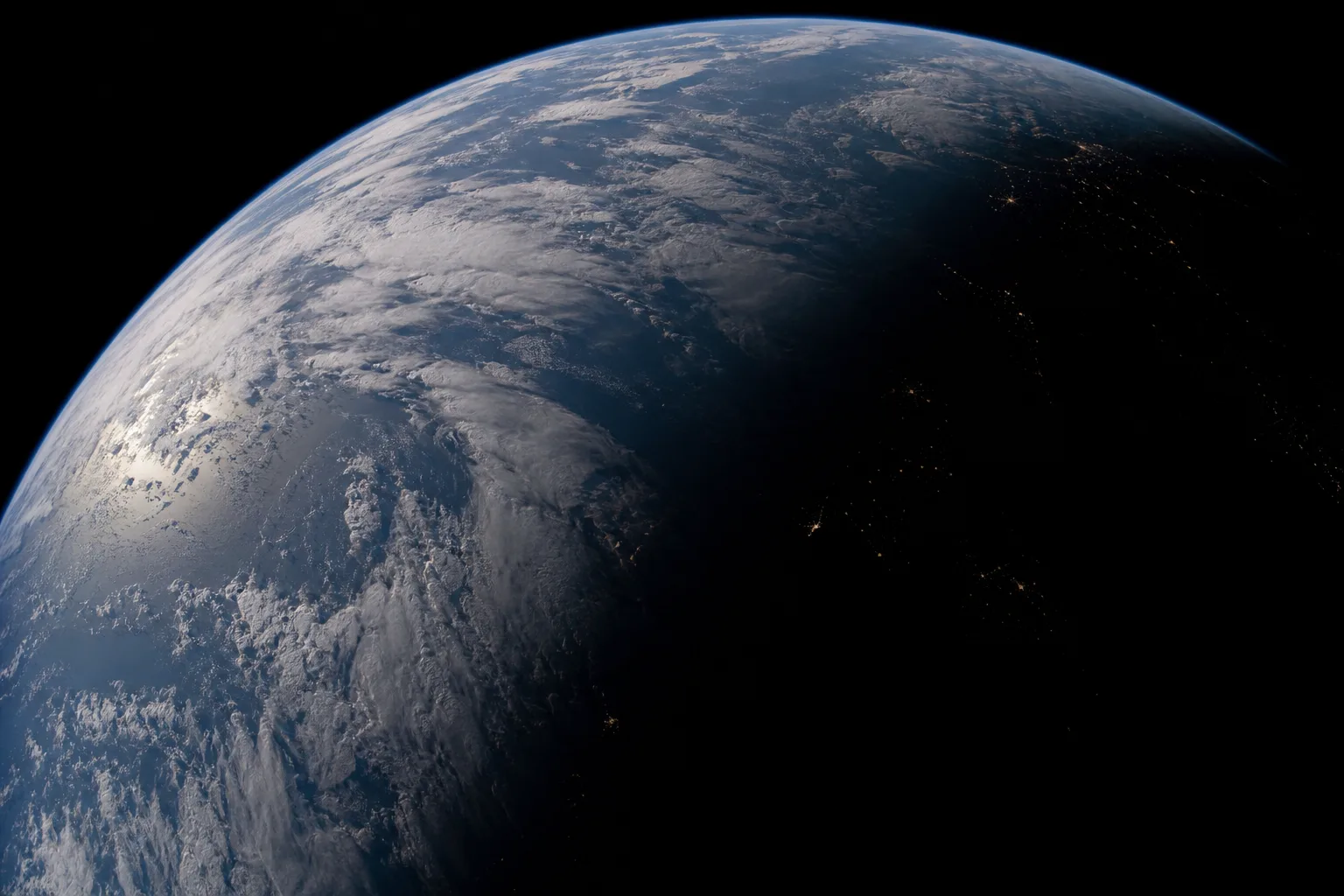
Every year, the June solstice rolls around and most of us mark it by checking the sunset time on our phones. But this year, we got something far more striking: a genuine view of the summer solstice from space, captured by a European weather satellite just minutes after the astronomical moment ticked over. It’s a reminder that the infrastructure quietly orbiting above us is doing a lot more than tracking rain clouds.
- ESA’s MTG-I1 satellite captured the summer solstice from space just six minutes after the June 21 solstice moment.
- The summer solstice from space image clearly shows Earth’s terminator line — the boundary dividing day from night.
- The Meteosat satellite series has been running since 1977, with 11 satellites launched across three generations.
- At the June solstice, the northern hemisphere experiences its longest day while the southern hemisphere sees its shortest.
Table of Contents
What ESA’s MTG-I1 Actually Captured
On June 21, 2026, the European Space Agency’s Meteosat Third Generation satellite — specifically MTG-I1, the first craft of the new generation — photographed Earth at a particularly precise moment. According to ESA, the image was taken just six minutes after the exact point of summer solstice. That kind of timing isn’t accidental; these satellites are continuously monitoring, which means moments like this get preserved almost incidentally, as a byproduct of the system doing its routine job. Seeing the summer solstice from space with this level of precision is a direct result of that continuous coverage.
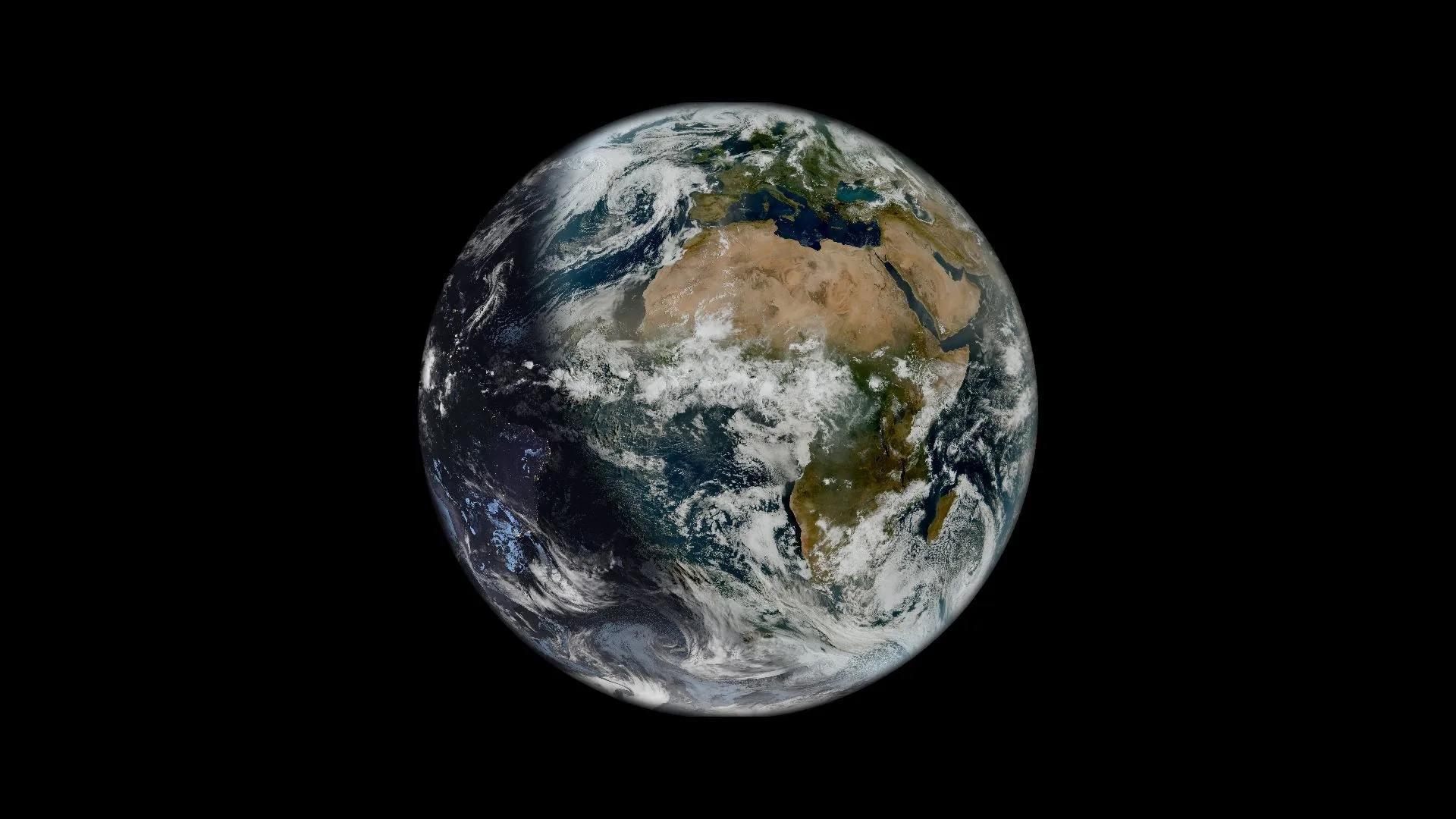
What the image shows is Earth’s so-called terminator line: the soft, gradual boundary separating the sunlit hemisphere from the dark one. It’s not a hard edge — atmospheric scattering means the transition from day to night is a slow fade rather than a clean cut — but in satellite imagery, it’s immediately legible. On the day of the solstice, that line is positioned at its most extreme annual tilt, and that’s what makes the photograph worth paying attention to. You’re essentially seeing Earth’s axial lean made visible.
The Meteosat Summer Solstice from Space — A Legacy Programme That’s Still Evolving
The Meteosat programme has a longer history than many people realise. The first Meteosat satellite launched back in 1977, making it ESA’s original Earth-observing mission. Since then, 11 satellites have flown across three generations of the programme, each iteration delivering sharper imagery, faster refresh rates, and broader spectral coverage than its predecessor.
The Third Generation — MTG — is the current standard-bearer, and MTG-I1 is its first deployed unit. The fleet is designed to serve weather monitoring across Europe, Africa, and portions of the Atlantic and Indian Oceans. That’s a formidable coverage footprint, and it means the data these satellites generate feeds directly into the forecast models that power everything from aviation routing to agricultural planning. When you think about how central weather prediction is to modern logistics and infrastructure, the MTG programme starts to look less like a science project and more like critical global utility. Every time we see the summer solstice from space through this programme, it underscores just how far that utility extends.
Why Solstice Imagery Matters Beyond the Pretty Picture
There’s a temptation to treat an image like this purely as spectacle — and fair enough, it is genuinely striking. But the summer solstice from space also carries real scientific and communicative value. For one, it illustrates the mechanics of Earth’s axial tilt in a way that no diagram really can. When you see the terminator line skewed across the globe at its most pronounced angle, the abstract concept of a 23.5-degree planetary tilt becomes something your eyes can actually process.

The solstice itself is one of those astronomical events that’s easy to intellectually understand but hard to viscerally feel. On June 21 in the northern hemisphere, daylight hours hit their annual peak — the longest day of the year, after which the days begin their slow contraction back toward December. Meanwhile, the southern hemisphere is sitting in midwinter, experiencing the shortest day of the year on the same date. Two halves of the same planet, having completely opposite experiences of light, captured in a single frame. Viewing the summer solstice from space makes that duality immediate and undeniable in a way that a text description simply cannot achieve. That’s a powerful thing to look at.
Satellites as Tools for Perspective, Not Just Prediction
We tend to evaluate Earth observation satellites almost entirely in utilitarian terms — what data do they produce, how accurately do they predict the weather, how fast is the refresh rate. And those metrics matter enormously. But there’s another function these missions perform that’s harder to quantify: they give us perspective on the planet we live on.
The history of solstice observation runs deep. Long before satellites, humans were engineering monuments and aligning structures to track the sun’s position — Stonehenge being the most obvious example, but far from the only one. As agriculture took hold and food systems became tied to sunlight availability and seasonal change, solstices weren’t just astronomical curiosities. They were survival markers, embedded into cultural calendars across virtually every civilisation that has ever existed. Observing the summer solstice from space with MTG-I1 capturing the June 21 moment is, in a way, the latest entry in an extraordinarily long tradition of humans finding ways to mark and record this particular point in Earth’s annual journey.
What’s different now is that the observation is passive and continuous. Nobody had to be on the roof of an observatory waiting for the right moment. A fleet of satellites that spends every hour of every day monitoring Earth’s atmosphere simply happened to be looking when the clock ticked over.
What the MTG Programme Signals for the Future of Earth Observation
The timing of this image — and the attention it’s drawn — points to something worth watching in the broader Earth observation landscape. Agencies like ESA are investing heavily in next-generation satellite infrastructure, and the MTG programme represents a significant step up in capabilities from earlier Meteosat generations. Higher-resolution imaging, faster cadence, and additional sensor types all combine to make the data more actionable for forecasters and researchers alike.
At the same time, commercial players are moving aggressively into the Earth observation market. Companies like Planet Labs, Maxar, and Satellogic are deploying constellations that can revisit any point on the globe in hours rather than days. ESA’s MTG programme isn’t trying to compete on revisit frequency — these are geostationary satellites with a fixed field of view rather than low-Earth-orbit imagers sweeping the planet — but the two approaches are increasingly complementary. Government agencies provide the long-baseline consistency and scientific rigour; commercial operators provide density and flexibility.
As the summer solstice from space image circulates, it’s worth remembering that it came from infrastructure built and maintained across decades, with a lineage stretching back almost 50 years. The newest satellites may be the most capable, but they stand on the operational history of everything that came before. Each time we receive a summer solstice from space photograph of this quality, it reflects the accumulated effort of generations of engineers, scientists, and mission planners who kept the programme running. And if they keep delivering images that make Earth’s mechanics legible to anyone who sees them, that’s not a bad return on the investment.
Frequently Asked Questions
What does the summer solstice from space actually look like?
ESA’s MTG-I1 captured an image of Earth just six minutes after the moment of summer solstice, clearly showing the terminator line — the fuzzy boundary that divides the planet’s daytime and nighttime sides. It offers a striking view of how much of Earth is bathed in light versus shadow on the year’s longest day.
What is the Meteosat Third Generation mission?
The Meteosat Third Generation is ESA’s latest fleet of Earth-monitoring weather satellites. MTG-I1 is the first of the new generation, designed to track weather patterns across Europe, Africa, and parts of the Atlantic and Indian Oceans.
What is Earth’s terminator line and why does it matter?
The terminator line is the fuzzy boundary on Earth’s surface that separates the sunlit dayside from the dark nightside. On a solstice, when Earth is at its maximum tilt, this line visually demonstrates the day length differences between hemispheres.
How does the June solstice differ for the northern and southern hemispheres?
In June, the northern hemisphere experiences its longest day of the year, with the most available sunlight. The opposite is true for the southern hemisphere, which experiences its shortest day of the year during the June solstice.