
- AI vaccine design produced pEVAC-PS, the first human-tested vaccine built entirely by artificial intelligence.
- Cambridge researchers used AI vaccine design to identify a stable target shared across all known sarbecoviruses.
- The Phase I trial on 39 volunteers showed no serious side effects and early signs of cross-coronavirus immunity.
- A spinoff company, DIOSynVax, is now advancing the platform toward flu and Ebola vaccine candidates.
Table of Contents
AI Vaccine Design Just Cleared Its First Human Test
AI vaccine design took a meaningful step forward this month when researchers at the University of Cambridge announced that their experimental pan-coronavirus vaccine, pEVAC-PS, had successfully completed a Phase I clinical trial in the UK. It’s a milestone that doesn’t get nearly enough attention: this is reportedly the first time a vaccine conceived and engineered entirely through artificial intelligence has been tested in human volunteers — and it held up.
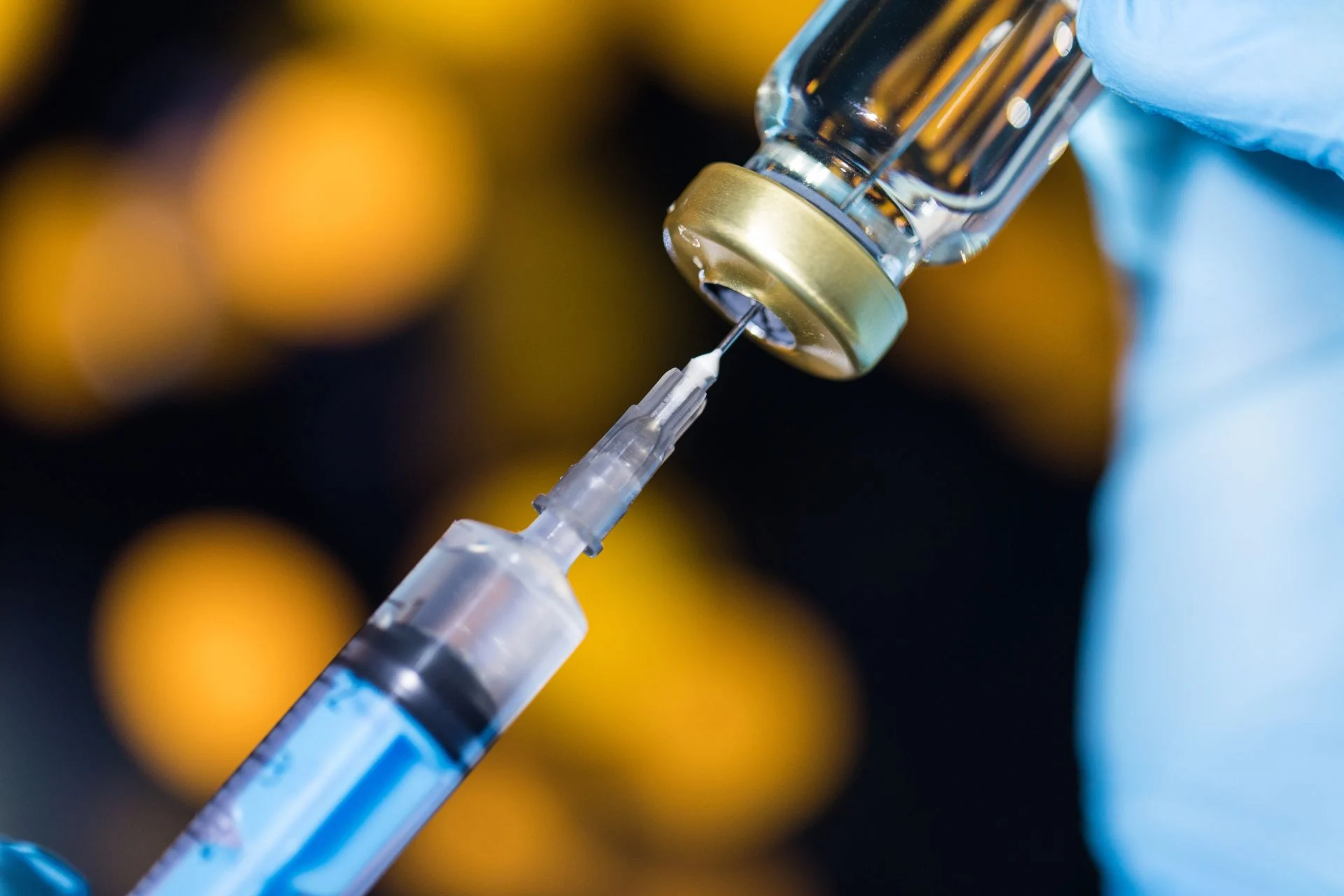
Thirty-nine healthy adults received injections of the candidate at one of four dose levels, delivered via a needle-free system. No serious or unexpected adverse events were detected. Early immunological data suggests the vaccine can provoke an immune response that crosses multiple coronaviruses at once — not just SARS-CoV-2, but related viruses in the sarbecovirus family, including bat coronaviruses that public health experts worry could seed the next major outbreak.
The results were published last month in the Journal of Infection. They’re preliminary by design — Phase I is about safety, not efficacy — but the direction of travel is genuinely interesting, and the underlying methodology is what makes this more than just another vaccine story.
Why Traditional Vaccines Keep Losing the Race
To understand why this matters, it helps to think about why COVID-19 boosters became an annual ritual almost as quickly as the flu shot. Coronaviruses and influenza viruses are particularly adept at mutating the surface proteins that conventional vaccines train the immune system to recognise. Update the vaccine, the virus shifts again. It’s an endless loop, and as Cambridge researcher Jonathan Heeney put it, it’s like “a dog chasing its tail.” This is precisely the problem that AI vaccine design is built to solve.
“We’ve overcome the problem of traditional vaccines, which have limited protection. It means we can escape the constant cycle of chasing the virus variants circulating in humans and updating the vaccines to try to catch up.” — Jonathan Heeney, Lab of Viral Zoonotics, University of Cambridge
The scientific community has been chasing so-called universal vaccines for years. The idea is to find parts of a virus that don’t change — structural regions so fundamental to the pathogen’s function that any mutation there would essentially break the virus itself. These conserved regions become the target. Hit them, and you don’t need to keep updating the vaccine every time a new variant emerges.
This strategy isn’t new. Researchers have been pursuing universal flu vaccines and broad-spectrum HIV treatments along similar logic for decades, with limited success. The hard part has always been identifying those conserved targets accurately and quickly enough to be practically useful. That’s exactly where AI vaccine design changes the equation.
How AI Vaccine Design Found the Right Target
The Cambridge team trained their AI model on genetic data drawn from all known sarbecoviruses — the broader viral family that includes SARS-CoV-2, the original SARS virus from 2003, and a wide range of bat coronaviruses. Bat coronaviruses are particularly important here. Scientists widely believe that SARS originated in bats, and there’s strong evidence that SARS-CoV-2’s lineage traces back to bat populations as well. The next major coronavirus threat will likely come from the same reservoir.
By processing this genetic dataset, the AI identified what the researchers call a “super-antigen” — a molecular target that remains consistent across the entire sarbecovirus family. The model didn’t just scan for conserved sequences; it was designed to find regions structurally and functionally critical enough that the virus can’t easily mutate its way out of recognition. That’s the specific insight that separates AI vaccine design from earlier computational biology efforts.
The resulting vaccine candidate, pEVAC-PS, encodes this super-antigen and was built to train the immune system against it. If it works as hoped in later trials, someone vaccinated with pEVAC-PS wouldn’t just be protected against the currently circulating SARS-CoV-2 variants — they’d have baseline immunity against related coronaviruses that haven’t even jumped to humans yet.
What the Phase I Data Actually Shows — and What It Doesn’t
Let’s be clear about what a Phase I result means. These trials are primarily designed to establish that a candidate is safe at various doses, not to prove it prevents infection. With 39 volunteers, you don’t have the statistical power to draw conclusions about protective efficacy. What you can do is check for danger signals and look for early immunological indicators — and on both counts, pEVAC-PS performed reasonably well.
The immune responses observed were described as modest and variable, which the researchers attribute in part to the fact that virtually everyone enrolled in the trial had already been exposed to SARS-CoV-2, either through infection, vaccination, or both. Pre-existing immunity can complicate how a new vaccine candidate registers in early-stage data. It’s a genuine confounding factor, not an excuse — but it does mean the Phase II results, conducted in a more carefully controlled population, will be far more informative about whether AI vaccine design has delivered a genuinely broad-spectrum candidate.
The authors noted in the paper that pEVAC-PS demonstrated “cross-reactive binding to conserved sarbecovirus epitopes” — meaning the antibodies it generated didn’t just recognise one coronavirus, they responded to shared structural features across multiple members of the family. That’s the exact mechanism the team was targeting, and seeing it appear in human data at this early stage is encouraging.
DIOSynVax and the Bigger Platform Play
Perhaps the most revealing detail in this story isn’t the vaccine itself — it’s what the Cambridge team has built around it. They’ve spun out a company called DIOSynVax (Digitally Immune Optimized Synthetic Vaccines) specifically to commercialise and scale the AI vaccine design platform used to create pEVAC-PS. The vaccine is effectively the proof-of-concept for a broader technology.
The team is already applying the same AI vaccine design approach to influenza and the Ebola virus — two pathogens with very different profiles but a shared problem: current vaccines offer incomplete or narrowly targeted protection. If the platform can identify conserved super-antigens for flu with the same precision it achieved for sarbecoviruses, it could finally deliver on the promise of a universal flu vaccine that the field has been promising for two decades.
Saul Faust, the lead trial researcher from the University of Southampton, made the stakes explicit:
“If we can develop and clinically advance this new class of vaccines before a virus outbreak begins, millions of lives could be saved, lockdowns avoided and the economy preserved.” — Saul Faust, University of Southampton
That framing — preparing defences before a virus even reaches human populations — is the real ambition here. It’s not just about building better COVID boosters. It’s about having a pre-loaded immune response to bat coronaviruses that haven’t made the species jump yet. The pandemic preparedness implications of AI vaccine design, deployed at that kind of timescale, are significant.
AI in Drug and Vaccine Development: A Growing Trend
Cambridge’s work sits within a much wider movement. DeepMind’s AlphaFold transformed protein structure prediction and opened new possibilities for drug target identification. Companies like Insilico Medicine and Recursion Pharmaceuticals have been using AI to accelerate drug discovery pipelines, with Insilico getting an AI-designed drug candidate into Phase II trials. Moderna has talked openly about using AI to speed up mRNA vaccine design. The convergence is real, and it’s picking up pace.
What makes the Cambridge/DIOSynVax effort distinct is the end-to-end AI vaccine design involvement in antigen selection — not just optimising a known target, but finding a target that human researchers might have missed entirely. That’s a qualitatively different use of the technology, and if the approach validates in Phase II, it will likely attract significant attention from governments and organisations that fund pandemic preparedness infrastructure.
AI’s reputation in public discourse has taken a beating lately, between generative model controversies and job displacement anxieties. But in applied science, the technology is quietly delivering results that are harder to argue with. A vaccine that might protect against the next coronavirus pandemic, designed by a machine, tested in humans, and working as intended — that’s a more consequential story than most of the AI headlines of the past year.