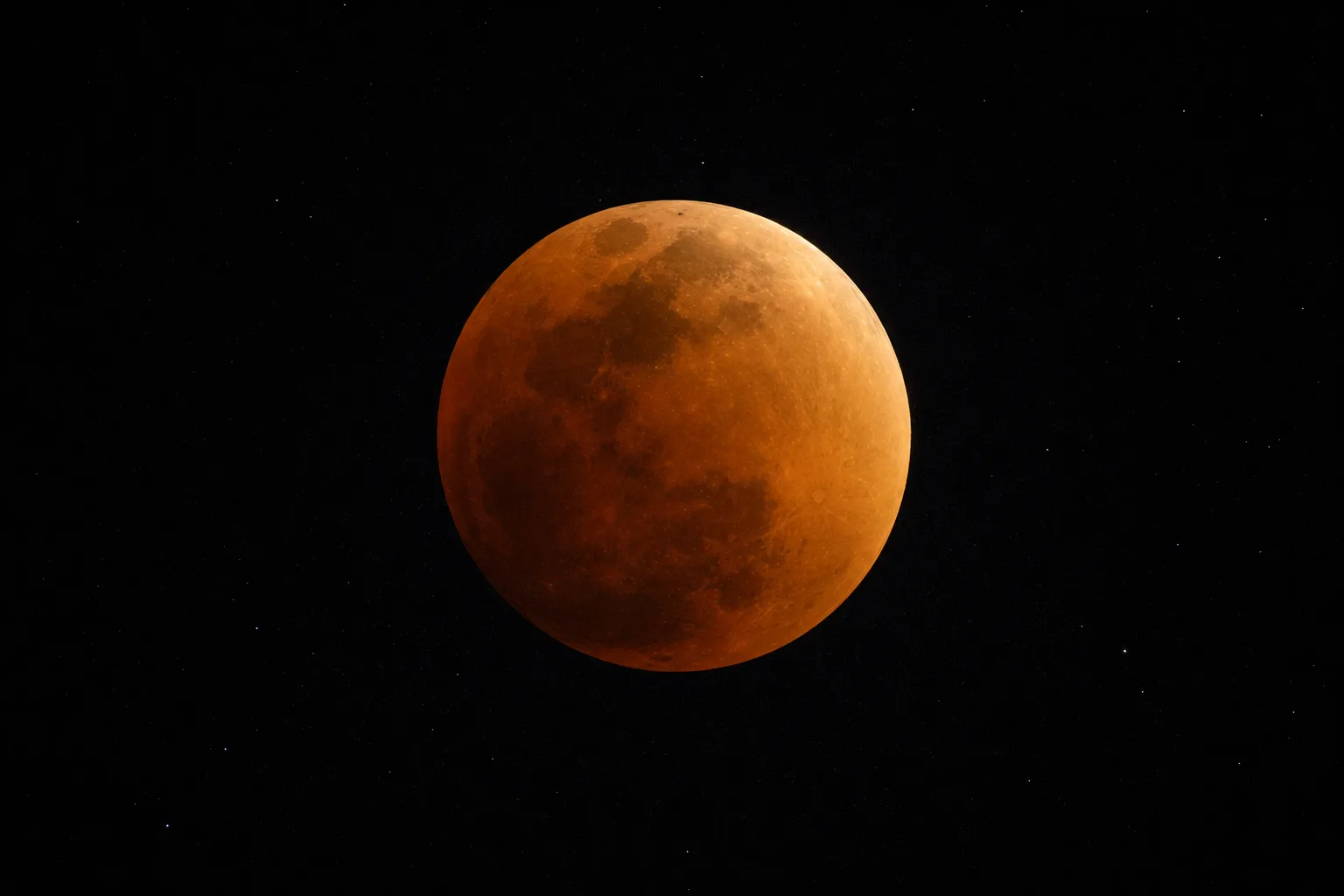
- The August 2026 lunar eclipse will plunge 96.2% of the moon into Earth’s shadow, making it the most impressive lunar eclipse until 2028.
- The August 2026 lunar eclipse peaks at 12:12 a.m. EDT on August 28, with the best views from North and South America.
- Nearly 1.3 billion people worldwide will be able to see the partial phase, depending on local weather conditions.
- Despite the reddish-orange hue at peak, it won’t technically be a blood moon since the moon never fully enters totality.
Table of Contents
The August 2026 Lunar Eclipse: What’s Actually Happening
The August 2026 lunar eclipse is shaping up to be one of the most striking astronomical events of the decade — at least for those of us who won’t see a total lunar eclipse until New Year’s Eve 2028. On the night of August 27–28, 2026, the full moon will slide deep into Earth’s umbral shadow, with 96.2% of the lunar surface darkening and taking on a reddish-orange tinge that will be unmistakable to anyone watching from a dark sky. That’s about as close as you get to a total eclipse without technically crossing the line.
So how does this work, exactly? Lunar eclipses happen when Earth positions itself directly between the sun and a full moon. Earth casts two distinct shadow zones: the penumbra, a soft outer shadow where sunlight is only partially blocked, and the umbra, the deep, dark core where direct sunlight is almost entirely cut off. During the August 2026 lunar eclipse, the moon will spend time passing through both — but crucially, a sliver of lunar surface will remain just outside the umbra at maximum eclipse, which is what keeps this from being classified as a total event. It’s a fine distinction that matters a lot to astronomers and only a little to anyone standing outside staring up at an unusually dim, copper-coloured moon.
This will be the first deep partial lunar eclipse anywhere on Earth since September 18, 2024. The next one after the August 2026 lunar eclipse won’t arrive until January 11–12, 2028 — and that one will only clip 2.4% of the moon’s surface. In practical terms, that makes 2026’s eclipse the most visually compelling lunar event for at least two years on either side of it.
Where You Can See the August 2026 Lunar Eclipse
According to data from Time and Date, roughly 987 million people — around 12% of the global population — will be positioned to witness every phase of the eclipse from start to finish. Expand that to the partial phase alone and you’re looking at about 1.3 billion people, or around 16% of the world. Those are big numbers, but they also come with a caveat: clear skies aren’t guaranteed, and cloud cover can ruin even the best-positioned observer’s night.
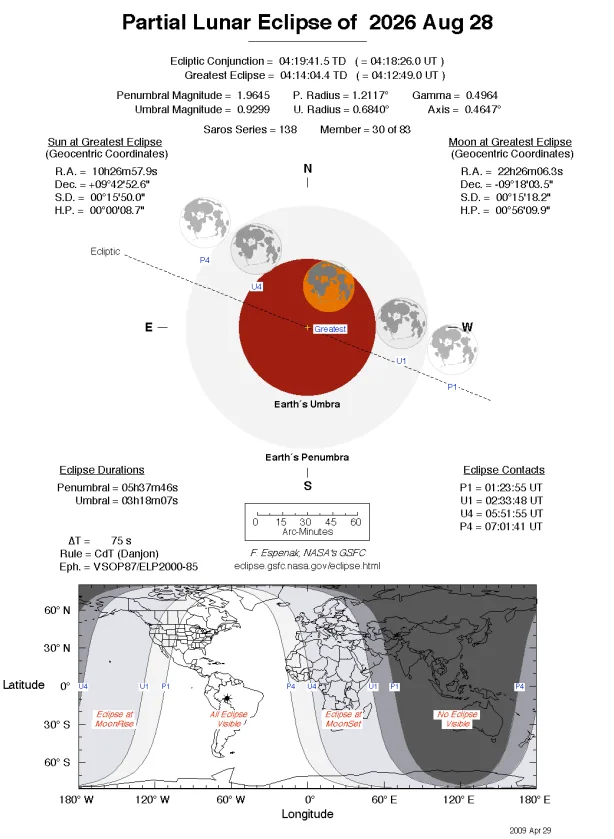
The prime real estate for the August 2026 lunar eclipse is firmly in the Western Hemisphere. North and South America get the most favourable geometry, with the moon well above the horizon during the peak of the event. Within North America, western US states statistically have the best odds of clear skies that time of year. In South America, northern Chile and inland Brazil — two regions known for their astronomical infrastructure and low humidity — rank among the most reliable spots on the planet for eclipse watching.
Europe can catch the August 2026 lunar eclipse too, but the timing is punishing. In London, maximum eclipse falls at 5:12 a.m. BST on August 28, with the moon setting at 6:15 a.m. and sunrise just nine minutes earlier at 6:06 a.m. Observers in Paris and Madrid are in a similar squeeze — maximum eclipse at 6:12 a.m. local time, with moonset following within about an hour. Head further east into central or eastern Europe and you lose the peak entirely. Anyone in Berlin will have the moon set almost simultaneously with the moment of maximum eclipse. It’s possible, but it’ll require early alarms, a clear western horizon, and a reasonable amount of luck with the weather.
When to Watch: Key Times for North American and European Observers
Lunar eclipses happen at a fixed universal time regardless of where you are — it’s just the local clock that shifts. The August 2026 lunar eclipse runs from 9:23 p.m. EDT on Thursday, August 27, through to 3:01 a.m. EDT on Friday, August 28. Maximum eclipse — the moment when 96.2% of the moon sits inside Earth’s umbral shadow — hits at 04:12 GMT on August 28.
For North American observers, that translates to:
- Eastern Time: 12:12 a.m. EDT, Friday, August 28
- Central Time: 11:12 p.m. CDT, Thursday, August 27
- Mountain Time: 10:12 p.m. MDT, Thursday, August 27
- Pacific Time: 9:12 p.m. PDT, Thursday, August 27
- Alaska Time: 8:12 p.m. AKDT, Thursday, August 27
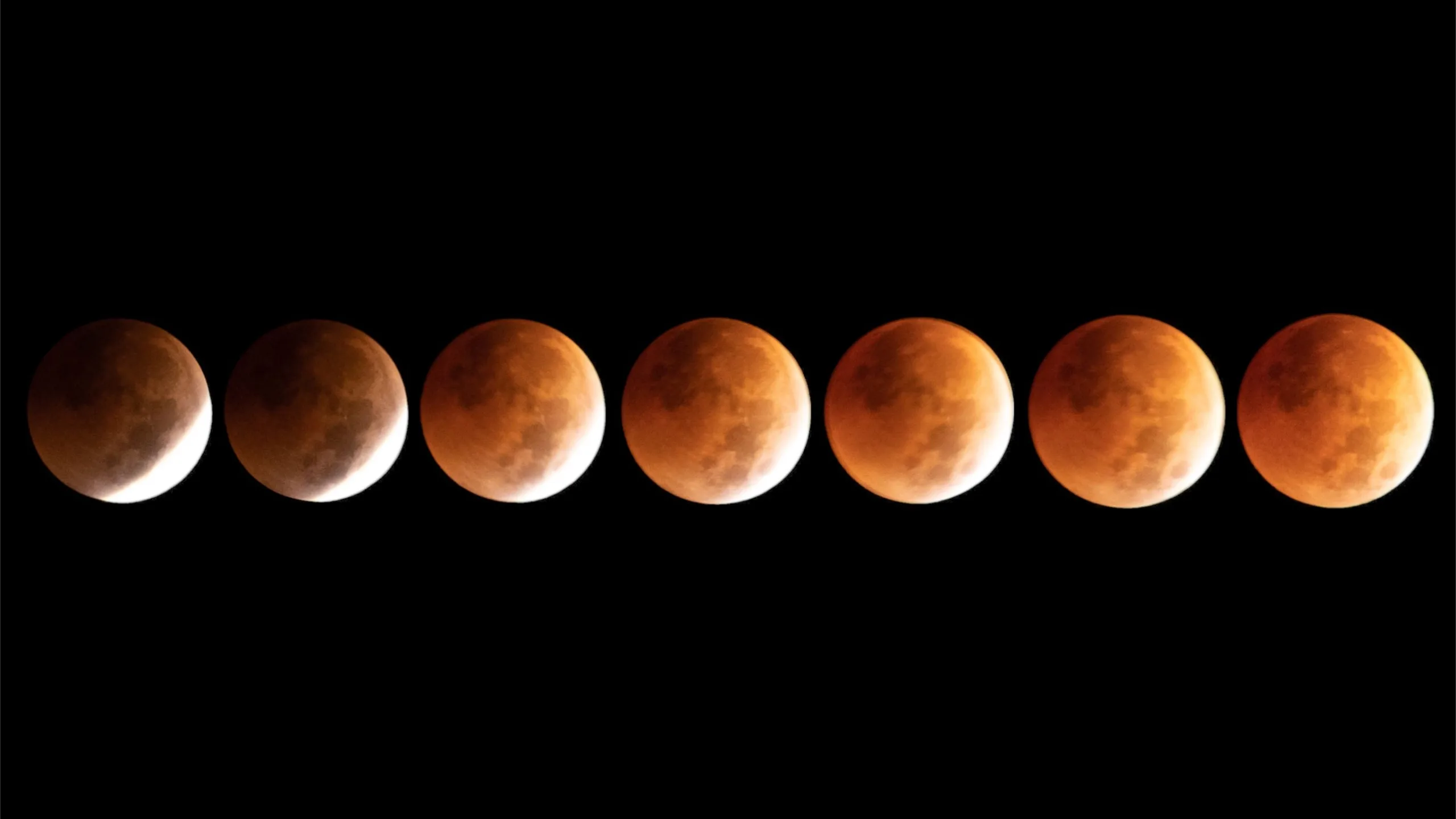
If you want to see the full spectacle of the August 2026 lunar eclipse rather than just the peak, get outside around 39 minutes before those times. That’s when Earth’s shadow will start visibly creeping across the lunar surface — one of the subtler but genuinely impressive moments of any eclipse, as the boundary between light and shadow inches across the moon’s face in real time. The entire event, counting both the penumbral and partial phases, runs to 5 hours and 38 minutes.
For European cities, here’s when maximum eclipse occurs:
- London: 5:12 a.m. BST — moonset at 6:15 a.m., sunrise at 6:06 a.m.
- Paris: 6:12 a.m. CEST — moonset at 7:09 a.m., sunrise at 7:01 a.m.
- Madrid: 6:12 a.m. CEST — moonset at 7:46 a.m., sunrise at 7:38 a.m.
- Brussels: 6:12 a.m. CEST — moonset at 6:58 a.m., sunrise at 6:49 a.m.
- Berlin: 6:12 a.m. CEST — moonset at 6:17 a.m., sunrise at 6:10 a.m.
Is This Really a Blood Moon?
The phrase “blood moon” gets thrown around a lot — sometimes accurately, sometimes not. Strictly speaking, a blood moon refers to the deep red colour the moon turns during a total lunar eclipse, when it’s completely submerged in Earth’s umbra. The reddish tint comes from sunlight bending around the edges of our atmosphere and scattering onto the lunar surface — the same physics that makes sunsets look orange, just viewed from 384,000 kilometres away.
During the August 2026 lunar eclipse, the moon will take on a reddish-orange appearance at maximum eclipse, and that colour will be real and visible. But because a narrow sliver of the lunar surface remains outside Earth’s shadow, it won’t achieve the full, uniform blood-red look of a true total eclipse. Think of it as a blood moon in spirit — dramatic, visually unusual, and worth your time — even if the astronomers won’t let you call it one officially.
One other thing worth knowing: the August 2026 full moon is the Sturgeon Moon, a name with roots in Native American agricultural and fishing traditions. The moon will be at roughly average apparent size during this event, having passed apogee — its farthest orbital point from Earth — just over five days prior. So don’t expect an unusually large or close moon. What you lose in size, you more than make up for with the eclipse itself.
What Comes Next: The Road to Totality
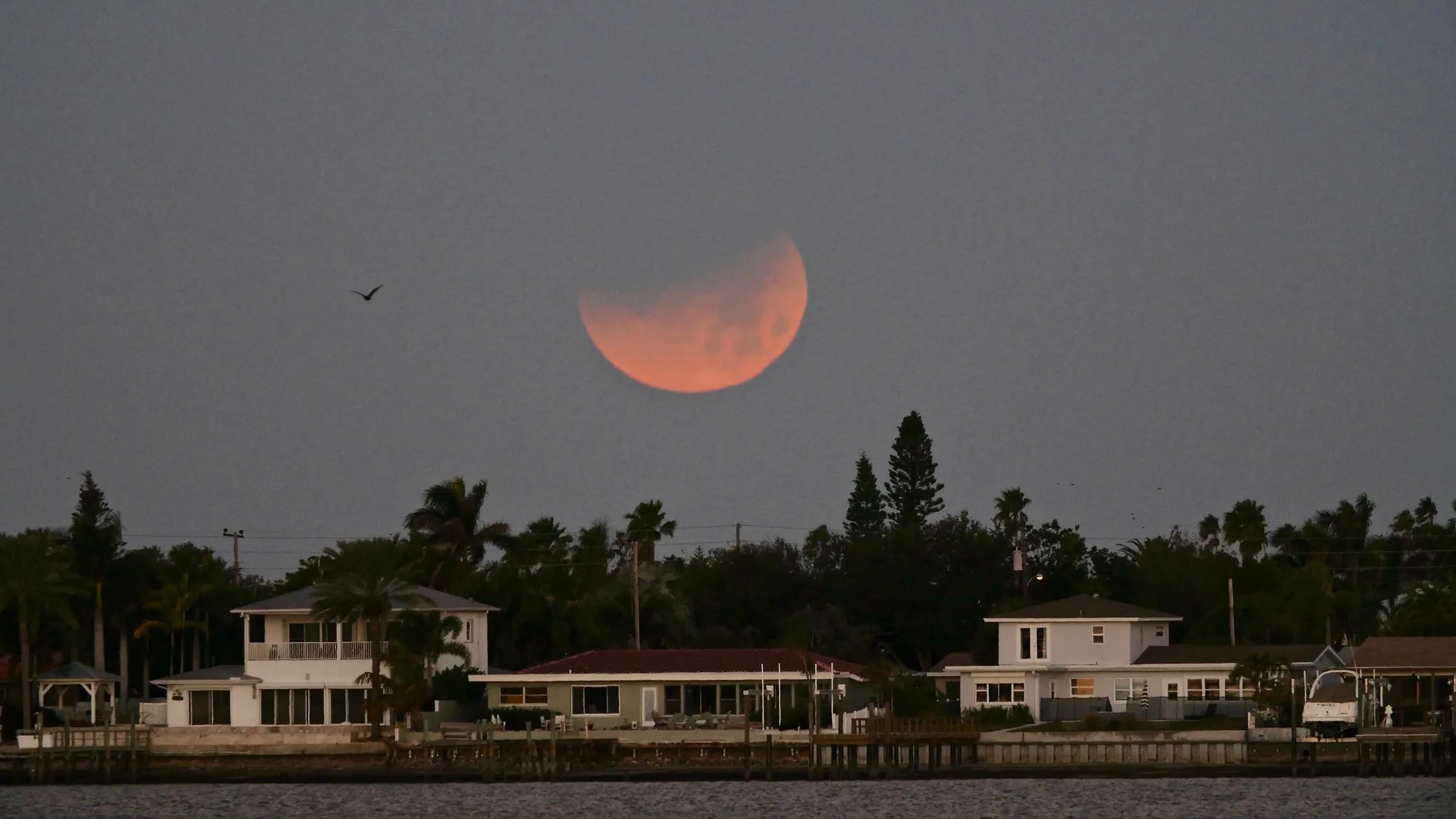
If you find yourself frustrated by the “almost but not quite” nature of a deep partial eclipse, the calendar eventually rewards patience. The next total lunar eclipse arrives on December 31, 2028 — a genuinely wide-reach event visible from Europe, Asia, Australia, Africa, and large swaths of North America. Two more total eclipses follow in 2029: one on June 25–26, visible from Europe, Africa, and the Americas, and another on December 20–21, covering much of the same global territory.
But here’s the thing about the August 2026 lunar eclipse that gets undersold in the chase for totality: a 96.2% partial eclipse is, for all practical purposes, as close to a total eclipse as most people will ever perceive with the naked eye. The colour change is real. The drama is real. And unlike a total solar eclipse — which demands precise positioning in a narrow path and can be a years-long logistical undertaking — the August 2026 lunar eclipse requires nothing more than stepping outside on a clear night and looking up. For anyone who’s never watched Earth’s shadow swallow the moon in real time, August 2026 is an excellent starting point.