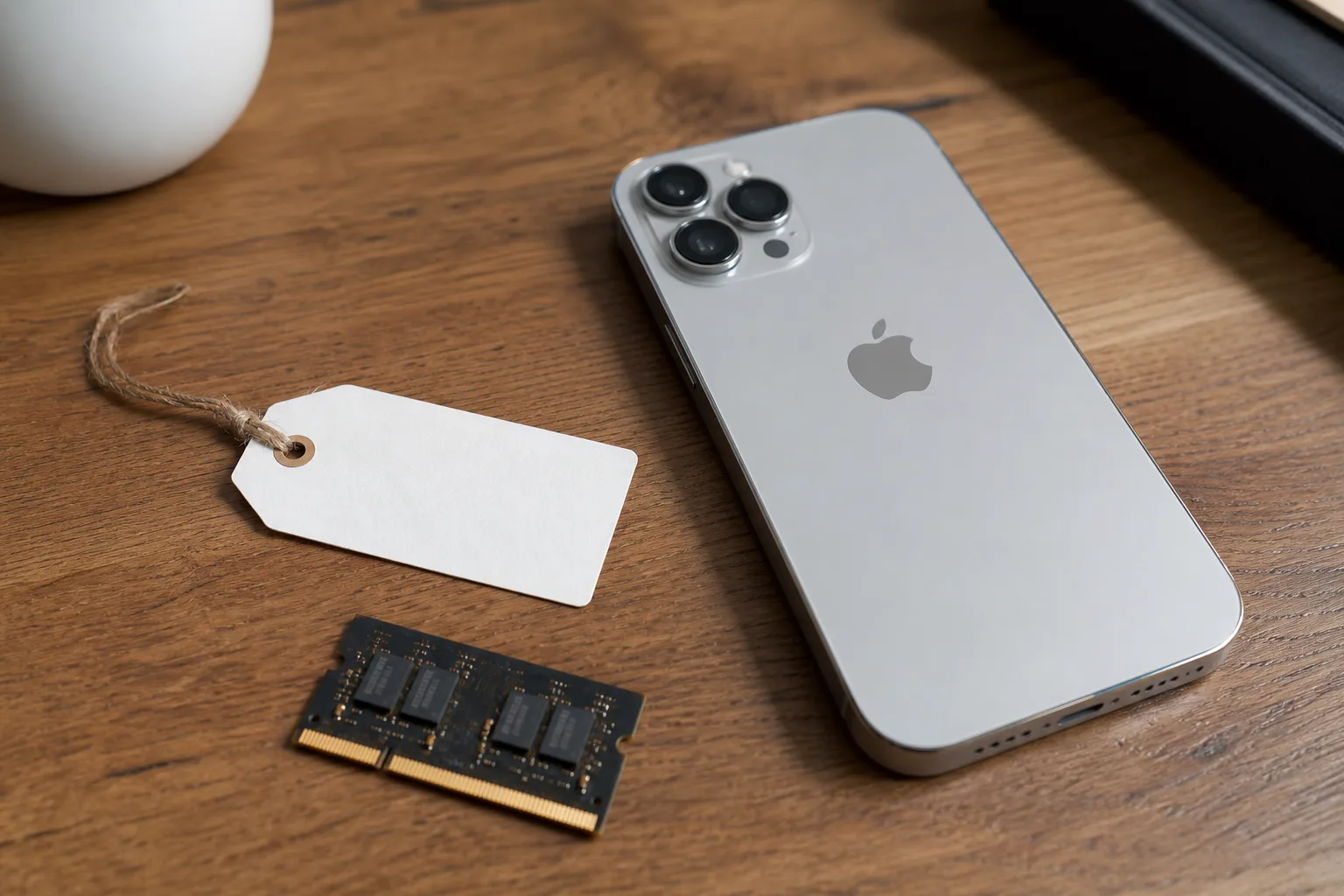
Apple price increases are no longer a rumour or an analyst’s speculation — they’re now a confirmed reality, straight from Tim Cook himself. Speaking to the Wall Street Journal, Apple’s CEO acknowledged that the company has hit a wall when it comes to absorbing the soaring cost of memory components, and that consumers should expect to pay more for Apple devices in the near future. It’s a significant admission, and it arrives at a particularly awkward moment for a company navigating tariff uncertainty, slowing upgrade cycles, and a critical year for its AI strategy.
- Apple price increases are coming after Tim Cook confirmed the company can no longer absorb surging memory costs.
- Apple price increases will affect multiple devices as a global RAM shortage pushes component costs beyond Apple’s margins.
- New Siri AI is drawing genuinely positive hands-on reactions, suggesting Apple Intelligence is finally finding its footing.
- The iPhone Air 2 is reportedly set to launch six months after the iPhone 18 Pro, with two significant upgrades.
Table of Contents
Why Apple Price Increases Are Now Unavoidable
The short answer is RAM. A sustained global shortage in memory components — driven by surging demand from AI data centres, automotive applications, and consumer electronics all competing for the same supply — has pushed prices to levels Apple can no longer quietly absorb. Apple price increases were perhaps inevitable given these pressures. Apple has historically been willing to take a margin hit on components to hold its price points steady, but there’s an obvious limit to that approach.
Cook’s candour here is notable. Apple rarely telegraphs price changes this explicitly, and the fact that he went on record with the Wall Street Journal suggests the increases are both imminent and meaningful enough that pre-empting customer frustration was worth the transparency hit. The question now is how steep those Apple price increases will be, and across which products.
iPhones are the most obvious candidate, particularly the Pro models, which have steadily climbed in RAM spec over recent generations. The iPhone 16 Pro Max ships with 8GB, and if the iPhone 18 Pro pushes to 12GB — as some component supply chain reports have suggested — the timing with a memory price spike couldn’t be worse. MacBooks and iPads with high-RAM configurations are equally exposed. Apple price increases across the Mac and iPad lines look just as likely as on iPhone. Apple’s ‘buy it at the same price as last year’ era may genuinely be over.
The Broader Memory Market Problem
It would be a mistake to read this purely as an Apple story. The memory market is under real structural pressure right now. The Semiconductor Industry Association has flagged persistent supply-demand imbalances across DRAM and NAND flash, with AI workloads consuming an outsized share of high-bandwidth memory (HBM) that would otherwise flow into consumer devices. Samsung, SK Hynix, and Micron — the three suppliers that essentially run the global memory market — have all seen their HBM allocations go primarily to Nvidia and the hyperscalers. What’s left for smartphones and laptops is tighter, and pricier.
Apple price increases, then, aren’t a sign of corporate greed so much as a downstream consequence of the AI infrastructure boom reshaping component markets. Every Android flagship maker is dealing with the same cost pressures — they’re just often less transparent about it, burying the increase in a quiet SKU reshuffle or regional pricing adjustment. In that sense, Apple price increases are at least being communicated honestly to consumers ahead of time.
Siri Is Actually Getting Good — and That Matters
Amid the pricing news, there’s a genuinely interesting subplot developing around Apple’s upgraded Siri. Hands-on time with the new AI-powered assistant — part of Apple’s broader Apple Intelligence rollout — has apparently been impressive enough to generate real enthusiasm among people who’ve spent time with it. That’s a meaningful shift from the reception Siri has gotten for most of the last decade, which ranged from mild frustration to outright mockery.
Apple has been methodical about rolling out Apple Intelligence features rather than dumping everything at once, and the Siri improvements appear to be benefitting from that approach. The on-device processing, tighter app integration, and richer contextual awareness are the pieces that previous Siri iterations always promised but rarely delivered. Whether the shipping product lives up to the hands-on impressions remains to be seen — Apple has a track record of demo-floor magic not always surviving contact with everyday use — but the early signals are more encouraging than most expected.
iOS 27: More Than Just AI
The Siri story is part of a wider iOS 27 feature set that’s shaping up to be one of Apple’s more substantive software updates in years. A handful of highlights are already emerging from beta builds. Low Power Mode is getting meaningful improvements — it’s been largely unchanged for years, so any upgrade here is welcome. More intriguingly, iOS 27 beta code apparently contains references to a foldable iPhone, which would represent a genuinely new product category for Apple if and when it materialises.
On the Mac side, macOS 27 is adding several iPhone Mirroring upgrades that make the feature significantly more usable — including, finally, the ability to resize the mirroring window. It sounds like a minor fix, but anyone who’s tried to use iPhone Mirroring on a large display knows the fixed-size window was an annoying limitation. These are the kinds of polish improvements that make Apple’s ecosystem feel cohesive rather than cobbled together.
The iPhone Air 2 and Apple’s Product Roadmap
Looking further ahead, reports indicate the iPhone Air 2 will arrive roughly six months after the iPhone 18 Pro — which, if Apple sticks to its usual autumn launch cadence, puts the Air 2 somewhere in early-to-mid 2027. It’s a continuation of the staggered launch strategy Apple tested with the original iPhone Air, giving each product its own moment rather than drowning it in a packed September event.
Two key upgrades are reportedly coming for the Air 2, though specifics remain under wraps. Given the original Air’s positioning as the ultra-thin option in the lineup, the logical areas for improvement are battery life — the Achilles’ heel of thin-phone design — and camera capability, where the Air currently sits below the Pro tier. Whether those upgrades are enough to drive meaningful volume in a lineup that’s becoming increasingly complex is a fair question.
The iPhone Air 2 timing also raises an interesting market dynamic. If Apple price increases roll through the iPhone 18 lineup at launch, a premium-feeling thin iPhone arriving six months later at a potentially different price point could either look like a bargain by comparison or feel like a tough sell in a market where consumers are already being asked to spend more. Apple’s pricing strategy for the Air 2 will be worth watching closely.
What’s clear across all of this is that Apple is navigating a more complex product environment than it’s faced in some time — higher component costs, a pressure to deliver on AI promises, and a device roadmap that’s expanding into new form factors. Apple price increases are the most immediate and tangible consequence for consumers, but the bigger story is whether Apple Intelligence, iOS 27, and a widening device portfolio can sustain the kind of customer loyalty that historically let Apple charge a premium in the first place.
Frequently Asked Questions
Why are Apple price increases happening now?
Tim Cook told the Wall Street Journal that Apple can no longer offset skyrocketing memory prices, and consumers will soon see Apple’s device prices go up. Rather than absorb the hit to margins indefinitely, Apple is passing some of those costs on to consumers across its device lineup.
Which Apple devices will get more expensive?
Apple hasn’t specified exact models, but memory is a core component across iPhones, iPads, and Macs. Devices with higher RAM configurations are likely to see a price impact.
What’s new in iOS 27 beyond the Siri improvements?
iOS 27 includes an improved Low Power Mode, references to a foldable iPhone buried in beta code, and macOS 27 is adding iPhone Mirroring upgrades including window resizing. It’s a wide-ranging update with something for almost every user.
When is the iPhone Air 2 coming out?
Reports suggest the iPhone Air 2 will debut roughly six months after the iPhone 18 Pro. It’s also expected to arrive with two notable hardware upgrades over its predecessor.