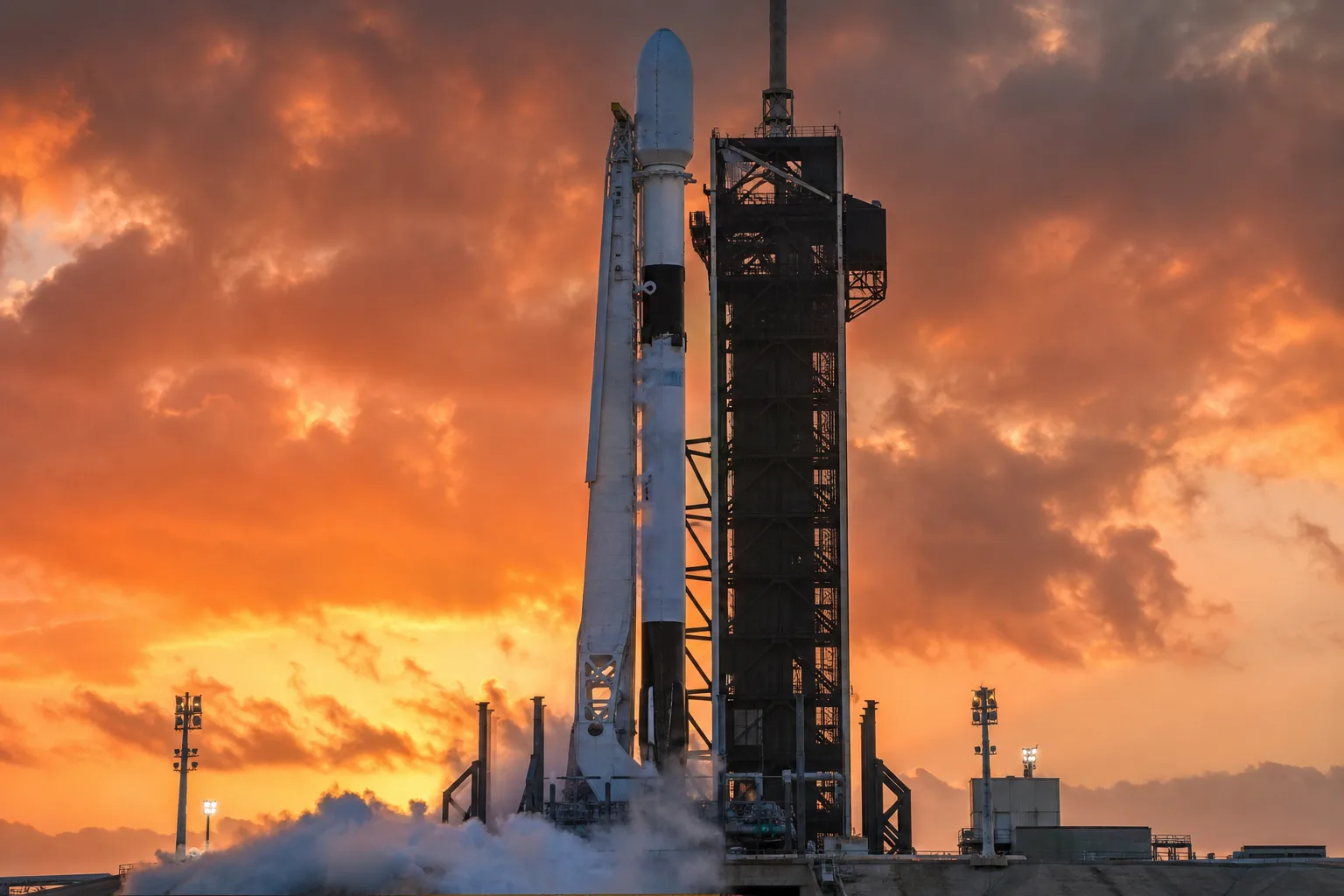
- The SpaceX IPO is targeting up to $75 billion, which would make it the largest stock market debut in history.
- A successful SpaceX IPO could push Elon Musk‘s net worth past the $1 trillion mark for the first time.
- SpaceX has grown from a scrappy rocket startup into the world’s dominant commercial launch provider.
- The listing arrives as investor appetite for space infrastructure and satellite broadband reaches an all-time high.
Table of Contents
The SpaceX IPO Is Unlike Anything Wall Street Has Seen Before
The SpaceX IPO is shaping up to be the most significant stock market event in a generation. The company says it plans to raise up to $75 billion when it goes public this month — a figure that would comfortably eclipse every previous record holder, including Saudi Aramco’s $25.6 billion debut in 2019, which has held the top spot for years. When a single offering can more than triple the existing record, it’s not just a big IPO. It’s a different category entirely.
For context, when Alibaba went public in 2014 and raised $25 billion in what was then the largest IPO ever, the financial world treated it as a once-in-a-decade moment. SpaceX is aiming for three times that. The scale of ambition matches the company’s entire operating philosophy: do things that weren’t supposed to be possible, then do them again, bigger.

How SpaceX Got Here
It’s easy to forget how improbable this moment looked twenty years ago. SpaceX’s first three Falcon 1 launches all failed. The company nearly went bankrupt before its fourth attempt finally reached orbit in 2008. Elon Musk has said he was weeks away from shutting the whole thing down. Now the same company is preparing to go public at a valuation that would make it one of the most valuable businesses on Earth.
What changed everything wasn’t just rockets — it was reusability. The development of the Falcon 9’s orbital-class booster recovery system fundamentally restructured the economics of getting to space. Where rivals charged $150 million or more per launch, SpaceX started undercutting them dramatically. NASA, the Department of Defense, commercial satellite operators, and dozens of national space agencies all became customers. By the early 2020s, SpaceX was responsible for more than half of all mass launched to orbit globally — a statistic that still sounds absurd when you say it out loud.
Then came Starlink. The company’s satellite internet constellation now has more than 6,000 active satellites in low Earth orbit and several million subscribers worldwide. Starlink generated an estimated $6.6 billion in revenue in 2023 alone, according to figures cited by analysts who track the private company’s financials. That recurring, subscription-based revenue stream is a big part of what makes the SpaceX IPO so attractive to institutional investors who might have been nervous about pure launch-revenue volatility.

What the SpaceX IPO Means for Elon Musk’s Net Worth
Here’s where the numbers get genuinely staggering. Elon Musk already holds one of the largest personal fortunes in recorded history, with his wealth fluctuating between roughly $150 billion and $400 billion depending on Tesla’s stock price and how you account for his stakes in various private ventures. A SpaceX IPO at $75 billion in fresh capital — implying a total company valuation well north of $300 billion at typical IPO dilution ratios — could add enough to his existing holdings to push his net worth past $1 trillion.
No individual has ever officially crossed that threshold, though Musk has flirted with estimates near it before. The trillionaire milestone has long been treated as theoretical — something that might happen eventually, driven by compounding returns over decades. The SpaceX listing could make it a near-term reality rather than a distant projection. Whether you find that inspiring or deeply uncomfortable likely depends on your broader views about wealth concentration, but either way, it’s a genuinely historic data point.
It’s also worth remembering that Musk’s SpaceX stake has never been freely tradeable. A public listing changes that, at least partially. Even if lockup periods prevent immediate sales, the liquidity event alone transforms paper wealth into something far more tangible — and far more financeable.
The Investor Calculus: Why Now?
SpaceX has resisted going public for years. Musk has been openly sceptical of the scrutiny and short-term pressure that comes with quarterly earnings calls and activist shareholders. So why now? A few factors seem to be converging.
First, Starship. The company’s fully reusable super-heavy launch system has cleared several critical test milestones, and development costs are enormous. Public markets offer a capital base that can sustain multi-year, multi-billion-dollar development programs without diluting early private investors beyond recognition. The SpaceX IPO gives the company a war chest for what comes next — and what comes next, if you believe the roadmap, includes point-to-point hypersonic travel, Mars missions, and a Starlink second-generation constellation that dwarfs the current one.
Second, the competitive landscape is shifting. Blue Origin has finally started delivering New Glenn launches. Rocket Lab continues to expand its Neutron program. ULA is being restructured. The window in which SpaceX enjoys near-total dominance won’t stay open forever, and locking in a massive capital raise now — when the company’s market position is at its strongest — is strategically sensible.
Third, interest rates. After years of elevated borrowing costs that made growth-stage capital expensive, the macro environment is becoming more favourable for high-valuation technology and infrastructure listings. Institutional appetite for the SpaceX IPO is reportedly intense, with sovereign wealth funds, pension managers, and tech-focused hedge funds all circling.

The Risks Nobody Should Ignore
None of this means the listing is without risk. SpaceX operates in an industry where a single catastrophic failure can ground a fleet for months and trigger regulatory investigations that halt revenue. The company’s relationship with the U.S. government — its largest single customer — is also tangled up with Musk’s various political activities and his role running the Department of Government Efficiency, a dynamic that introduces a kind of counterparty risk that’s genuinely hard to model.
Starlink’s growth trajectory also depends partly on regulatory approvals in dozens of countries, some of which have been slow or openly hostile. And Starship, for all its promise, is still in development. Delays are not just possible — given the history of large aerospace programs, they’re close to inevitable.
Retail investors who pile into the SpaceX IPO chasing the headline numbers should also keep in mind that SpaceX will be listing at a valuation that prices in a very optimistic future. That’s not necessarily wrong — companies like Apple and Amazon rewarded believers who bought into optimistic valuations early — but the margin for error is thin when your starting price tag is in the hundreds of billions.
A Defining Moment for the Commercial Space Industry
Beyond the numbers and the personalities, the SpaceX IPO represents something larger: the moment when commercial space officially became a mainstream investable asset class. For decades, space was the exclusive preserve of national agencies with government budgets and political mandates. Then a handful of private companies started chipping away at the model. Now one of those companies is going public at a valuation that exceeds many sovereign space programs combined.
That changes the incentive structures for everyone. Competitors will find it easier to raise capital when a sector leader has demonstrated public market viability. Suppliers, launch customers, and satellite operators will all be re-evaluated through the lens of their exposure to SpaceX’s ecosystem. The ripple effects through the broader aerospace and defence supply chain could be significant and long-lasting.
If the listing goes as planned, the SpaceX IPO won’t just be the biggest debut in stock market history. It will mark the point where humanity’s expansion into space became, in a very literal sense, a public investment.