

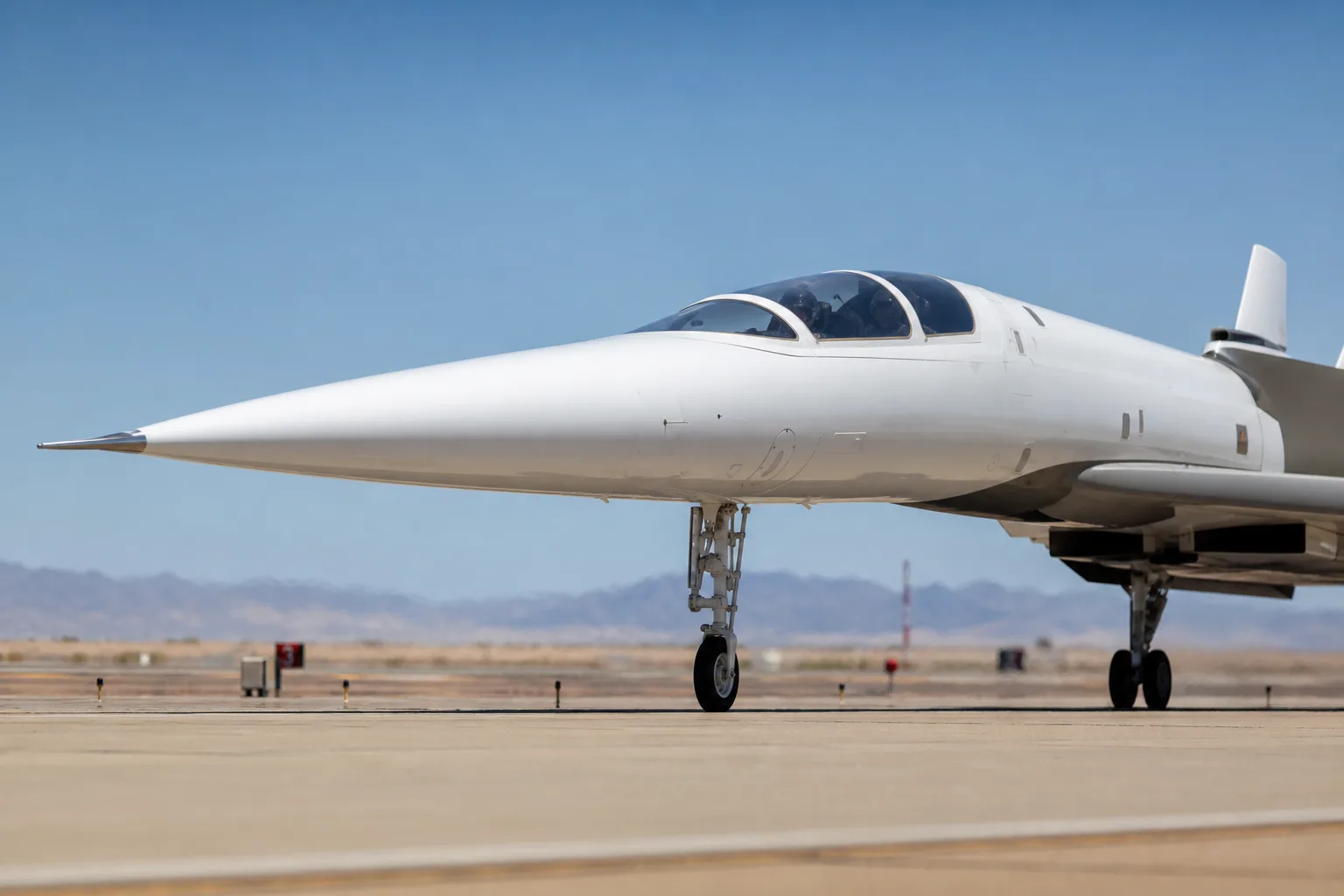
- NASA’s X-59 supersonic flight reached Mach 1.1 on June 5, 2026, more than six months after the aircraft’s maiden flight.
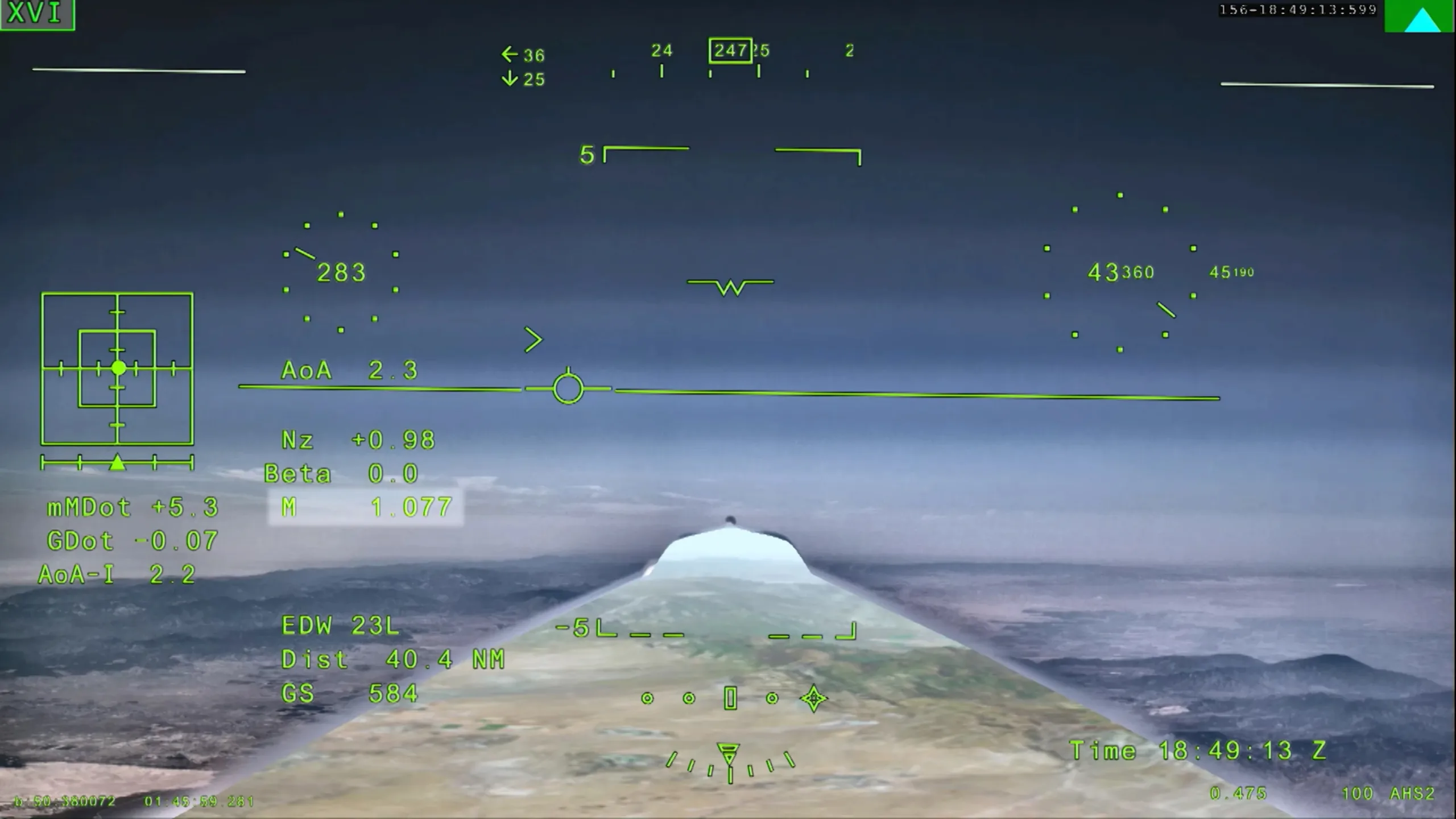
- The NASA X-59 supersonic flight lasted 81 minutes from Edwards Air Force Base, reaching 43,400 feet altitude.
- A follow-up mission-conditions flight targeting Mach 1.4 and 55,000 feet is planned within days of the milestone.
- Data gathered could persuade regulators to lift a 1973 FAA ban on overland supersonic commercial flight in the US.
Table of Contents
NASA X-59 Supersonic Flight: What Actually Happened
The NASA X-59 supersonic flight everyone in the aerospace world had been waiting for finally arrived on June 5, 2026. At 2:08 p.m. Eastern, NASA test pilot Jim “Clue” Less lifted off from Edwards Air Force Base in California’s Mojave Desert — the same patch of desert where Chuck Yeager first broke the sound barrier back in 1947 — and did something no one had done in this particular aircraft before: pushed it past Mach 1.
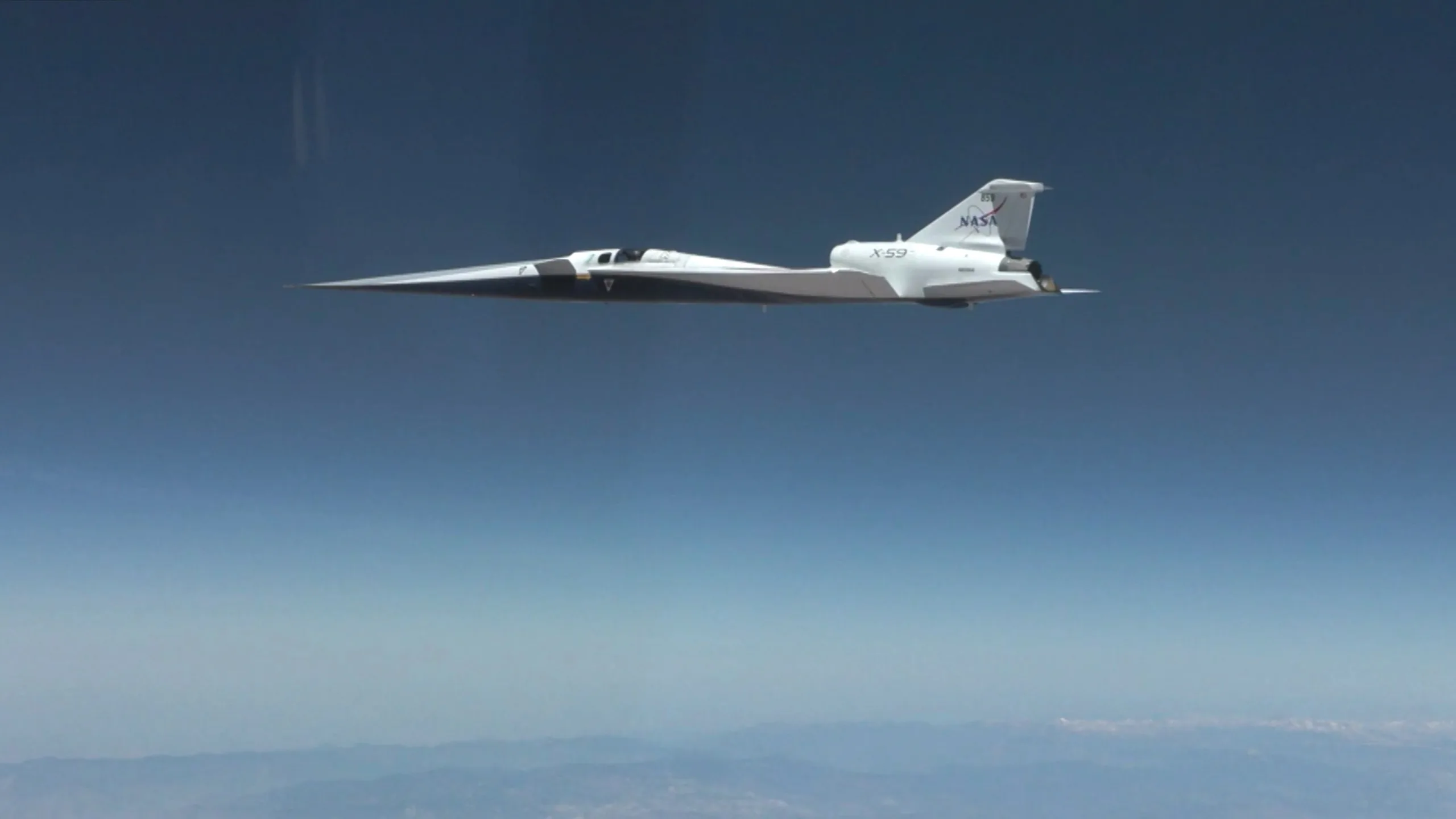
Less took the X-59 to a peak altitude of 43,400 feet and a top speed of 713 mph, which works out to roughly Mach 1.1. The flight lasted 81 minutes before touching back down at Edwards. It’s a modest figure on the speed spectrum — Concorde cruised at Mach 2, and military fighters routinely push well beyond that — but Mach 1.1 was never the point. Demonstrating that the aircraft can punch through the sound barrier without rattling the windows of everyone below it is what counts here.
Why the X-59’s Quiet Thump Matters More Than Raw Speed
The NASA X-59 supersonic flight program sits at the heart of NASA’s Quesst (Quiet Supersonic Technology) program, and the core question it’s trying to answer isn’t “how fast can you go?” but rather “how quietly can you do it?” That distinction is what separates this project from the supersonic arms race of the 1960s and 70s.
When a conventional supersonic aircraft breaks the sound barrier, it produces a sonic boom — a sharp, explosive crack caused by the shockwaves generated at the nose and tail converging into a single large wave by the time they reach the ground. The X-59’s unusually elongated nose, one of its most visually striking features, is specifically engineered to prevent that convergence. Instead of one big boom, the shockwaves arrive separately, producing what NASA describes as a quiet “thump” roughly equivalent to the sound of a car door closing in the distance.
Built by Lockheed Martin’s legendary Skunk Works division in Palmdale, California, the X-59 has been methodically building up flight hours since its first flight on October 28, 2025. NASA Administrator Jared Isaacman noted that the team flew the aircraft 16 times in the 90 days leading up to the NASA X-59 supersonic flight milestone — a pace that suggests the program has found a productive operational rhythm. “Since the aircraft’s first flight on Oct. 28, 2025, the team has made tremendous progress, flying 16 times in the last 90 days and getting into a steady test rhythm,” Isaacman said.
The 1973 Ban That Grounded Supersonic Commercial Aviation
To understand why the NASA X-59 supersonic flight program exists, you need to go back more than 50 years. In 1973, the FAA banned commercial supersonic flight over U.S. land, citing the disruptive impact of sonic booms on communities below flight paths. The timing effectively killed the Concorde’s prospects in the American market before they ever materialized — the Anglo-French jet was limited to transatlantic routes, which made its economics brutal and contributed to its retirement in 2003.
That ban has been on the books ever since, even as supersonic technology advanced significantly. Companies like Boom Supersonic have spent years developing quieter designs, and Boom’s Overture program has attracted airline commitments from American Airlines and United. But none of these ventures can build a viable business if they’re locked out of the world’s largest domestic aviation market. That’s the regulatory wall the NASA X-59 supersonic flight is specifically designed to help dismantle — not by lobbying, but by providing the hard data regulators need to justify rewriting the rules.
“NASA will share this data with U.S. and international regulators to help establish new data-driven noise standards to enable a future viable market for supersonic commercial flight over land,” the agency said in its official statement. That’s a carefully worded sentence. NASA isn’t promising to bring back supersonic travel. It’s promising to give regulators the scientific basis to make that call themselves — which is exactly the kind of agency-led groundwork that moves policy in Washington.
What Comes Next: Mission Conditions and Community Overflights
The NASA X-59 supersonic flight at Mach 1.1 was a proof-of-concept moment, but the real test profile is more demanding. Within days of that milestone, NASA planned to push the X-59 to what it calls “mission conditions” — Mach 1.4 at approximately 55,000 feet. That’s the aircraft’s intended operational baseline, and the altitude matters as much as the speed. Flying higher gives the shockwaves more time and distance to dissipate before they reach people on the ground, which is central to the whole quiet-thump theory.
After mission conditions testing is validated, the plan is for the NASA X-59 supersonic flight campaign to continue with the aircraft flying over several U.S. communities so NASA can gather real-world perception data — essentially asking residents what they heard, and how they felt about it. That qualitative data, combined with acoustic measurements, will form the bedrock of any future regulatory petition. It’s a smart strategy: rather than asking the FAA to take a theoretical argument on faith, NASA will walk in with documented community responses from actual flights.
Michael Kratsios, the White House’s assistant for science and technology, framed the first supersonic flight in suitably patriotic terms. “The X-59’s first supersonic flight is a testament to America’s enduring leadership in science, engineering and aerospace innovation,” he said. Political endorsement from the Office of Science and Technology Policy isn’t nothing — it signals that the current administration sees the NASA X-59 supersonic flight program as worth backing, which matters for continued funding as the test campaign gets more expensive.
The Bigger Picture for Commercial Supersonic Travel
There’s a growing commercial ecosystem that’s watching the NASA X-59 supersonic flight program very closely. Boom Supersonic isn’t the only player — Hermeus, a startup backed by the U.S. Air Force, is developing a hypersonic aircraft that could eventually carry passengers at Mach 5. Hermeus and others in the space need the same regulatory shift that NASA’s Quesst program is working toward.
The irony is that the technology to fly supersonically without shaking buildings has arguably existed in some form for years. What’s been missing is the independent, government-certified data set that regulators can point to when they justify changing a rule that’s been in place since the Nixon administration. That’s what the NASA X-59 supersonic flight effort is ultimately about — not breaking speed records, but building an evidentiary case that’s bulletproof enough to survive congressional scrutiny and FAA rulemaking.
NASA Administrator Isaacman also used the moment to signal broader ambitions. “I hope this is the first of many collaborations as we rebuild NASA’s X-plane portfolio,” he said — a line that suggests the agency sees the NASA X-59 supersonic flight as more than a one-off demonstrator program. If the X-59 delivers, expect NASA to come back to Congress arguing for more experimental aircraft programs, something the agency hasn’t invested in heavily for decades. For an organisation that’s navigating significant budget pressure, a high-visibility success in supersonic research could be exactly the kind of win it needs right now.
Frequently Asked Questions
What is the goal of the NASA X-59 supersonic flight program?
The NASA X-59 supersonic flight program aims to develop technology for quiet supersonic flight without producing a disruptive sonic boom. Instead of a loud crack, the X-59 is designed to generate a quieter thump, which NASA hopes will help establish new noise standards and enable a future market for supersonic commercial flight over land.
Why was overland supersonic flight banned in the United States?
The FAA banned overland supersonic commercial flight in 1973 to protect people and property from the disruptive noise of sonic booms. NASA’s Quesst program is building the evidence base needed to help regulators revisit those rules.
How fast did the X-59 fly on its first supersonic flight?
Test pilot Jim ‘Clue’ Less pushed the X-59 to a top speed of 713 mph — approximately Mach 1.1 — at an altitude of 43,400 feet. The plane took off and landed at Edwards Air Force Base in California during an 81-minute flight on June 5.
Who built the X-59 and what makes its design different?
Lockheed Martin Skunk Works built the X-59 for NASA. Its most distinctive feature is an unusually long nose, which is part of its design to generate mild thumps rather than loud sonic booms.

