- The Axiom Space funding round has grown to over $525 million following a $175 million extension led by new investor MUFG Bank.
- The Axiom Space funding round signals surging institutional confidence in commercial space stations and NASA’s Artemis lunar program.
- NASA reversed its controversial ‘core module’ proposal after industry pushback, agreeing to stick with its original commercial station framework.
- Japan’s largest bank joining the round marks a significant moment of international financial capital entering low Earth orbit infrastructure.
Table of Contents
Axiom Space Funding Round Tops $525 Million
The Axiom Space funding round just got a lot bigger. The Houston-based commercial space company announced on June 4 that it had added more than $175 million to a round it first closed at $350 million back in February, bringing the total to over $525 million. The extension wasn’t planned from the start — Axiom’s own CEO describes it as “opportunistic” — but that framing actually says something important about where investor appetite for commercial space infrastructure stands right now.
The original $350 million raise was anchored by Type One Ventures and the Qatar Investment Authority, with a mix of other backers rounding it out. The Axiom Space funding round extension brought in existing investors adding to their positions, but the headline addition is a genuinely new name: MUFG Bank Ltd., Japan’s largest bank by assets. When a traditional Japanese megabank opens a space innovation office and writes a cheque into a commercial space station company, it’s a signal that institutional finance is taking the sector seriously in a way that would have seemed far-fetched a decade ago.
Why MUFG Bank’s Entry Matters
MUFG isn’t a venture firm making a speculative bet. It’s one of the largest financial institutions on the planet, with roughly $3 trillion in assets under management. The bank’s managing director and head of its space innovation office, Takumi Hashizume, put it plainly: “Axiom Space is building the orbital infrastructure that will define the next era of the space economy. We are committed to supporting the companies that make commercial human space exploration and the global space economy sustainable for the long term.”
That language — sustainable, long-term, infrastructure — is the vocabulary of institutional capital, not venture capital. It suggests MUFG is thinking about the Axiom Space funding round not as a moonshot startup bet but as a foundational infrastructure play, similar to the way banks have historically financed ports, airports, or undersea cables. Whether that framing holds up depends entirely on whether the commercial space station market materialises the way Axiom and its backers are betting it will. But the fact that a Japanese megabank is even framing it this way is notable.
There’s a geopolitical dimension here too. Japan has been deepening its involvement in commercial space through partnerships with NASA’s Artemis program, and MUFG’s participation in the Axiom Space funding round fits neatly into that broader national strategy. Japan’s JAXA and U.S. space companies have been quietly building interdependencies for years. An MUFG stake in Axiom cements a financial thread running alongside the technical and diplomatic ones.
What the Money Is Actually For
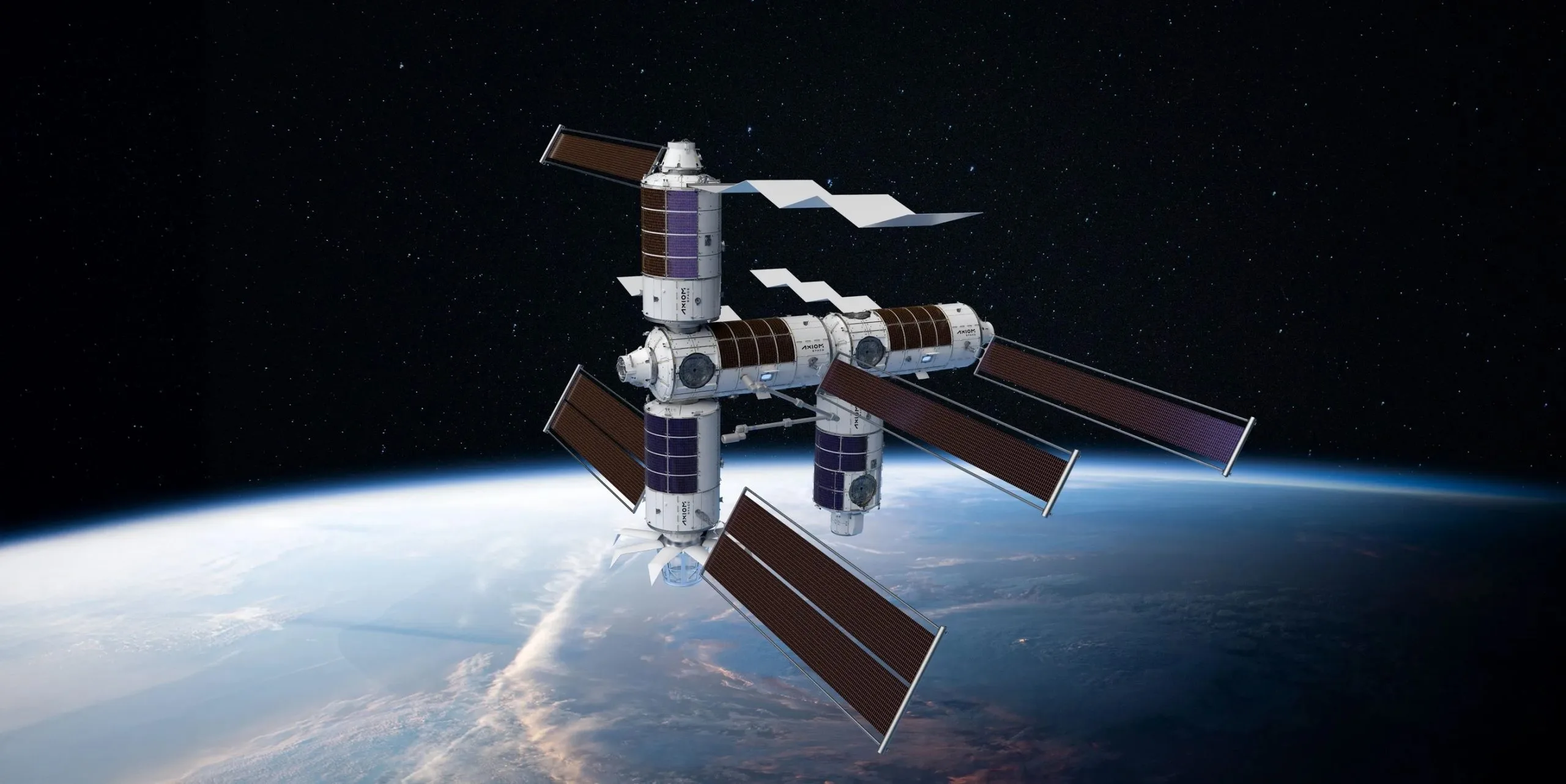
Axiom says the fresh capital raised through the Axiom Space funding round will go toward two main programmes: its commercial modular space station and its spacesuit work for NASA’s Artemis lunar exploration campaign. Both are enormous undertakings, and both are at critical junctures.
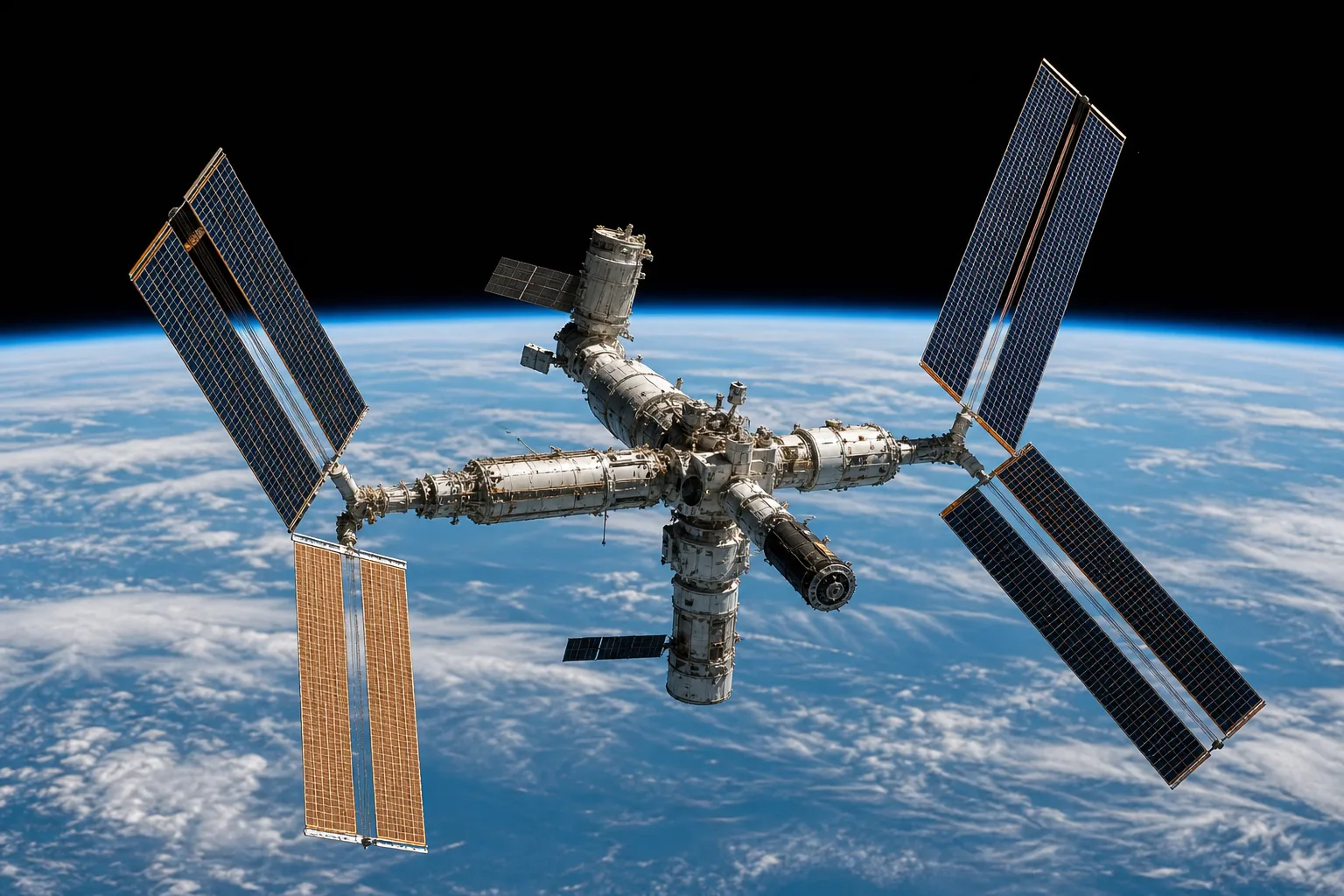
The space station side is Axiom’s core long-term bet. The plan is to attach commercial modules to the International Space Station — the first of which, Axiom Module 1, is still working through scheduling and readiness reviews — and eventually detach them to form a free-flying commercial station after the ISS is decommissioned, currently targeted for around 2030. That’s a tight window, and the engineering, regulatory, and financial complexity is staggering. Over $500 million sounds like a lot until you consider that the ISS cost NASA and its partners somewhere north of $150 billion to build and operate over its lifetime.
On the spacesuit side, Axiom holds a NASA contract to develop the Exploration Extravehicular Mobility Unit, or xEMU — the suits astronauts will wear on the lunar surface during Artemis missions. It’s a high-visibility, technically demanding contract that also serves as a powerful marketing tool for the company’s capabilities. Every image of an astronaut stepping onto the Moon in an Axiom suit is free advertising for the commercial space station pitch. The two programmes reinforce each other in ways that make Axiom’s investment story more coherent than many space startups.
NASA Backs Down on the Core Module — Industry Wins This Round
The Axiom Space funding round news lands against a backdrop of a significant policy reversal at NASA. In March, at an event called Ignition, the agency floated a proposal that alarmed commercial space developers: NASA would build a government-owned “core module” to be installed at the ISS, to which commercial modules could dock. The agency argued this would give commercial stations a more viable path forward given what it saw as slow demand development in the market.
The industry response was swift and almost uniformly negative. Companies including Axiom, Starlab (backed by Voyager Space and Airbus), and others pushed back hard through a formal request for information process. The volume of that feedback — 1,500 pages, according to NASA’s acting associate administrator for space operations, Joel Montalbano — apparently landed with some force. “Industry response was loud and clear, and we took it,” Montalbano said at a National Academies meeting on June 2.
By June 1, NASA had confirmed it was dropping the core module idea and returning to its original Commercial LEO Destinations (CLD) framework, which supports multiple competing commercial station developers with NASA funding and anchor tenancy commitments. An industry day to outline next steps is expected within weeks.
Axiom welcomed the reversal publicly, posting on social media that it “appreciates NASA’s decision to continue the Commercial LEO Destinations program under its established framework” and calling cooperation between private industry and NASA “paramount to preserving the continuous U.S. human presence in LEO.”
The episode is instructive. NASA’s core module idea wasn’t entirely irrational — the agency does have legitimate concerns about whether commercial demand will mature fast enough to sustain standalone stations — but it misjudged how strongly the industry would resist a model that could have given NASA significantly more control over the architecture. The companies have too much invested, financially and strategically, to accept a framework that subordinates their own stations to a government-built anchor. That dynamic isn’t going away.
The Bigger Picture for Commercial Space Infrastructure
The Axiom Space funding round, taken alongside the NASA policy reversal, tells a coherent story about where commercial low Earth orbit is heading. Capital is flowing in — from sovereign wealth funds in Qatar, from Japan’s largest bank, from venture firms with long time horizons. The policy environment, despite occasional turbulence like the core module episode, is broadly supportive of private station development. And the competitive landscape, with Starlab, Orbital Reef (Blue Origin and Sierra Space), and others in the mix, is creating the kind of parallel-track development that NASA says it wants.
The harder question is demand. NASA’s concern about slow market development wasn’t invented. Beyond NASA itself, the customer base for commercial space station time — pharmaceutical companies running microgravity research, manufacturing startups, international space agencies — is real but still nascent. The scale of the Axiom Space funding round reflects strong investor conviction, but Axiom CEO Jonathan Cirtain’s comment that “investor interest in this round outpaced what we set out to raise, which speaks to the moment we’re in” is a confident read on the situation — one where the supply of capital and ambition is running somewhat ahead of proven revenue.
That’s not unusual for infrastructure plays at this stage. The economics of commercial space stations won’t fully reveal themselves until the ISS is gone and there’s no alternative. How the competing developers — and their investors — manage the years between now and that inflection point will determine whether this turns into a thriving orbital economy or an expensive lesson in premature infrastructure build-out. Analysts tracking the Axiom Space funding round will be watching closely to see whether the capital translates into operational milestones on schedule. For now, Axiom has the funding to stay in the race. The next question is whether the finish line moves.