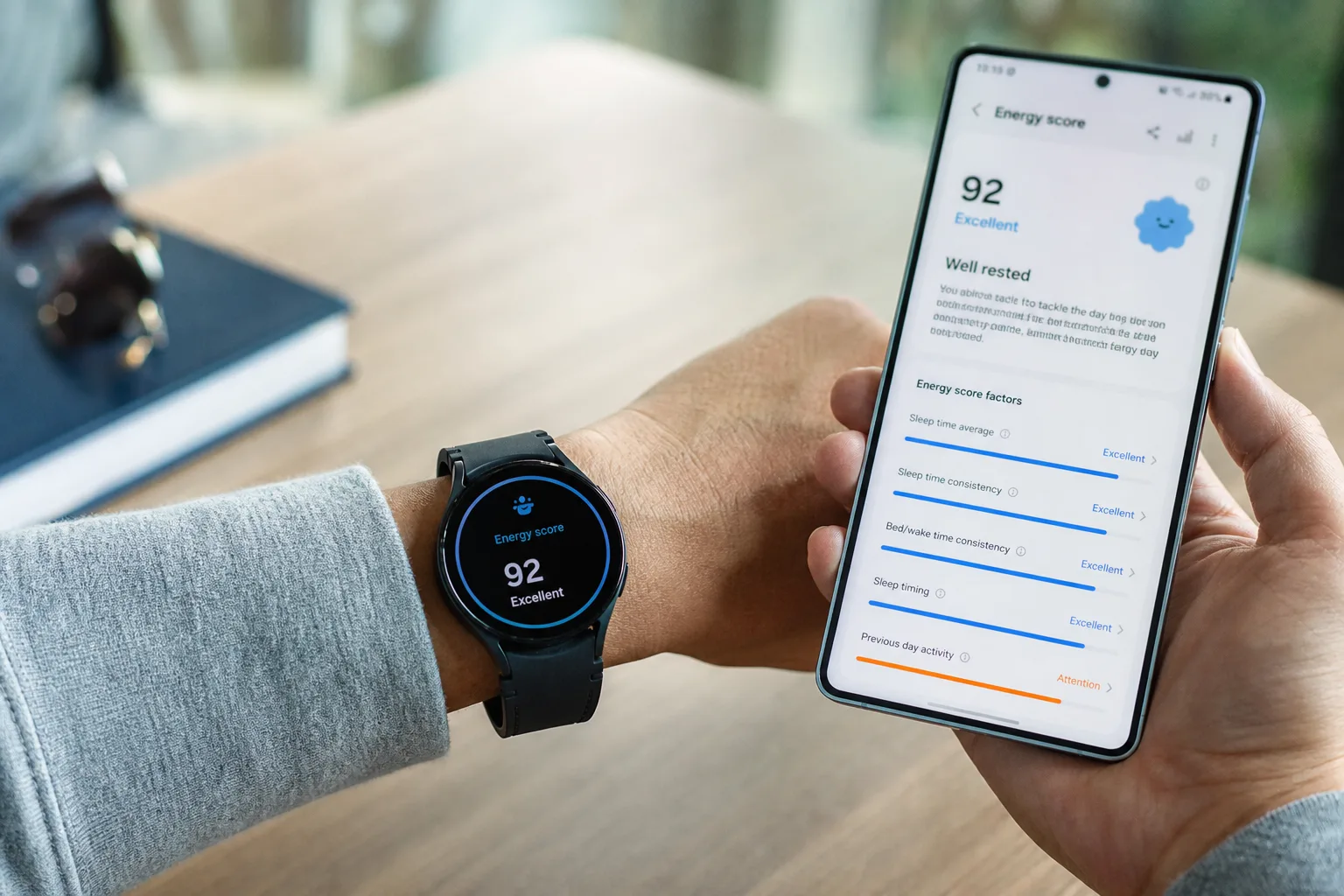
The Samsung Health update Samsung just announced is one of the most significant overhauls the platform has seen in years — and it arrives on June 8, several weeks before the Galaxy Watch 9 series is expected to launch. That gap is deliberate. Samsung is framing this as a preview, a taste of what the next generation of Galaxy wearables will fully unlock when they hit shelves.
- The Samsung Health update arriving June 8 introduces Vitals, Heart Health Score, and Daily Cardio Load ahead of Galaxy Watch 9.
- This Samsung Health update replaces the Vascular Load metric with a smarter, AI-driven cardiovascular scoring system.
- A full app redesign organises data into five new categories including Sleep, Activity, Nutrition, Mindfulness, and Vitals.
- Samsung is likely saving its AI Health Assistant feature for the Galaxy Watch 9 Unpacked event on July 22 in London.
Table of Contents
Why This Samsung Health Update Is Different
Samsung has been collecting health data from wrist-worn devices for years. Heart rate, sleep stages, blood oxygen — the numbers have always been there. The problem, as any fitness tracker owner knows, is that raw numbers without context are easy to ignore. What does a resting heart rate of 58 bpm actually mean for you, today, given how you slept last night and how hard you trained yesterday? Most platforms have historically left that interpretation entirely to the user. The Samsung Health update changes that approach directly.
Samsung’s stated goal with this Samsung Health update is to close that gap using AI-powered insights. The company wants the Galaxy Watch to shift from passive data collector to something closer to a proactive health companion — one that tells you what the data means and what you should actually do about it. That’s an ambitious target, and the new features reflect it.
What’s Actually New in the Samsung Health Update
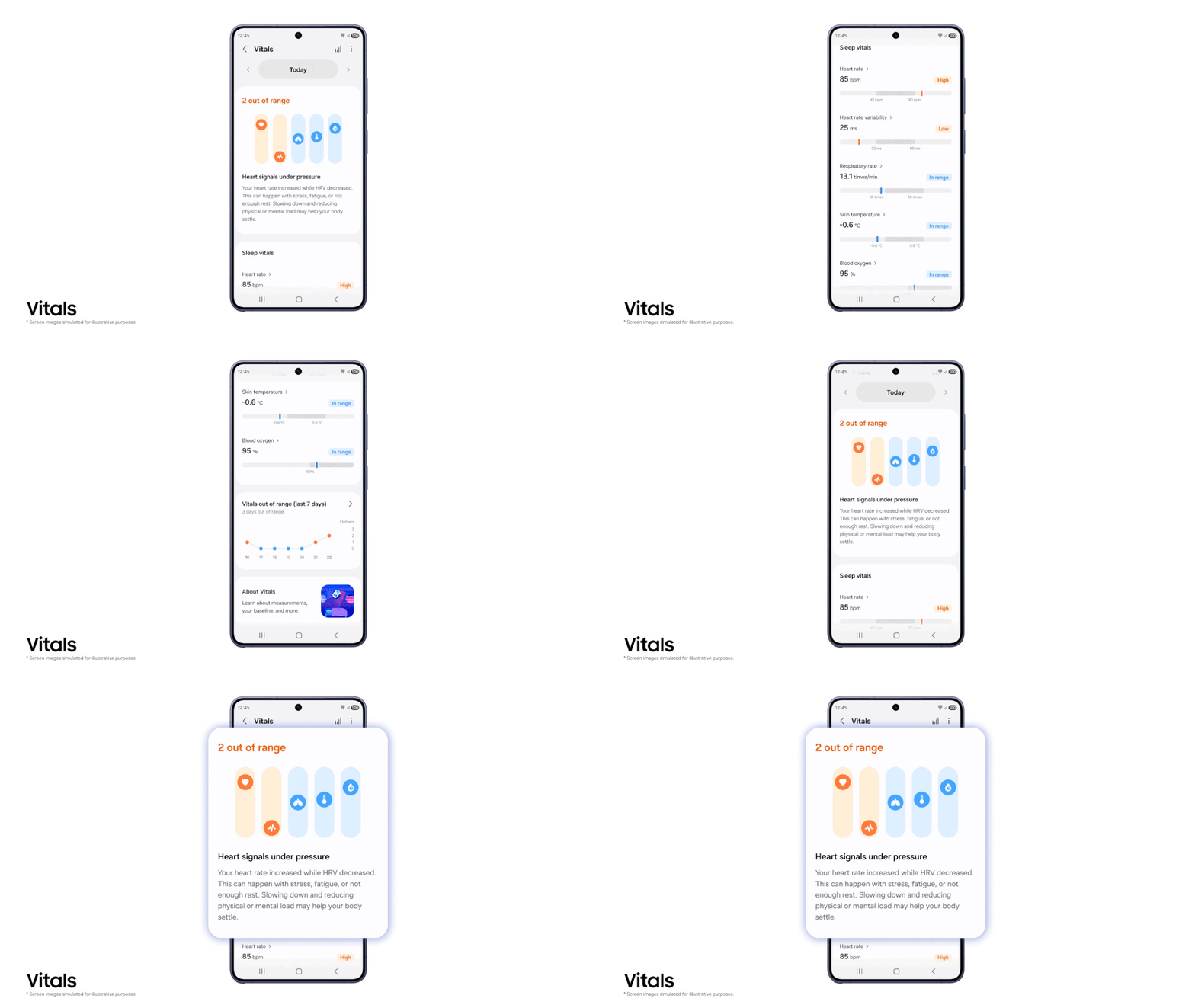
The headline addition is Vitals, a feature that will feel familiar to anyone who uses an Apple Watch. Apple’s own Vitals feature, introduced with watchOS 11, works on a similar principle: track multiple overnight biometric signals, compare them against your personal baseline, and surface alerts only when something meaningful changes. Samsung’s version in this Samsung Health update monitors five overnight metrics — heart rate, heart rate variability, respiratory rate, skin temperature, and blood oxygen levels — and flags deviations that could indicate fatigue, illness, or a need for extra recovery. The key word there is meaningful. Rather than burying users in notifications every time a single metric dips slightly, the system is designed to filter out the noise.
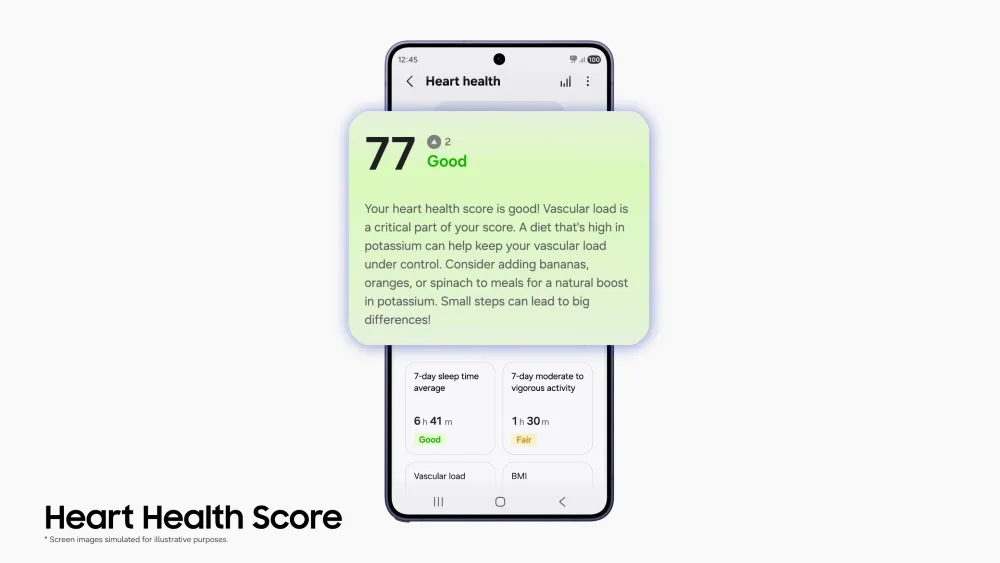
Then there’s the new Heart Health Score, which replaces Samsung’s existing Vascular Load metric. Vascular Load was a decent enough concept but always felt a little clinical and hard to act on. The Samsung Health update‘s Heart Health Score takes a broader view, combining sleep quality, stress levels, physical activity, and body composition into a single daily number. The idea is to give users an at-a-glance read on their cardiovascular wellness without requiring a degree in exercise science to interpret it. Think of it less as a medical diagnostic and more as a daily check-in number — something you can track over weeks and actually see move in response to your habits.
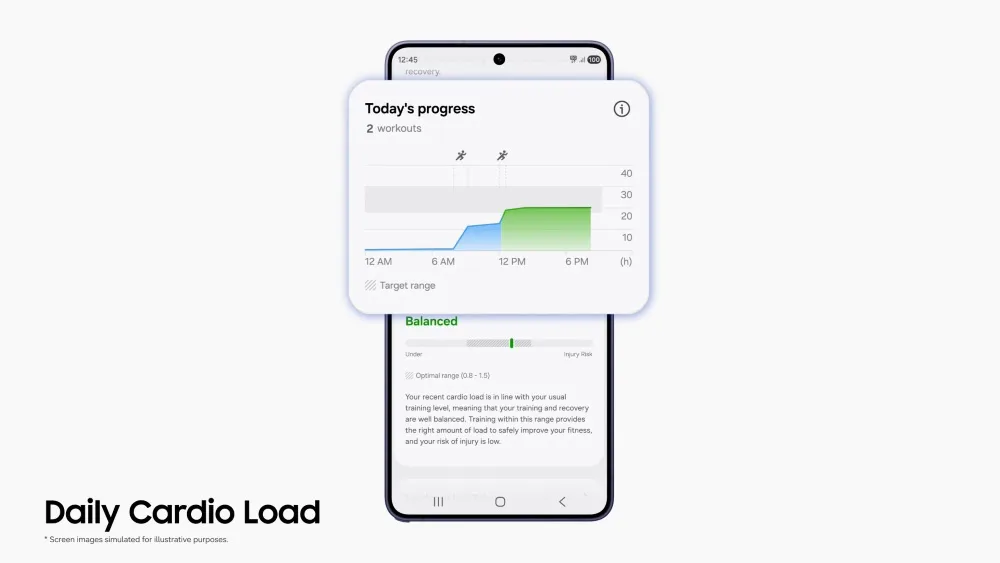
Daily Cardio Load is arguably the feature most serious fitness users will care about in this Samsung Health update. It tracks the cumulative cardiovascular strain your body has absorbed and uses that to recommend training intensity and recovery time. Overtraining is a genuinely common problem, particularly among people who are motivated but not working with a coach. Your watch knowing that you’ve pushed hard for three consecutive days and recommending a lighter session — or rest — is practically useful in a way that step counts simply aren’t. Garmin and Polar have offered similar training load metrics on their devices for years, so Samsung is catching up to established players here rather than breaking new ground, but bringing it to the Galaxy ecosystem matters for the sheer number of users it reaches.
The fourth new tool is Fitness Index, which evaluates heart rate data, VO2 max estimates, and daily step counts to map out where a user is strong and where they’re falling short across overall fitness. VO2 max in particular has become a key metric across the wearables industry — the World Health Organization consistently links cardiorespiratory fitness to long-term health outcomes — so its inclusion in this Samsung Health update makes sense as a cornerstone of any serious fitness assessment tool.
A Redesigned App to Match
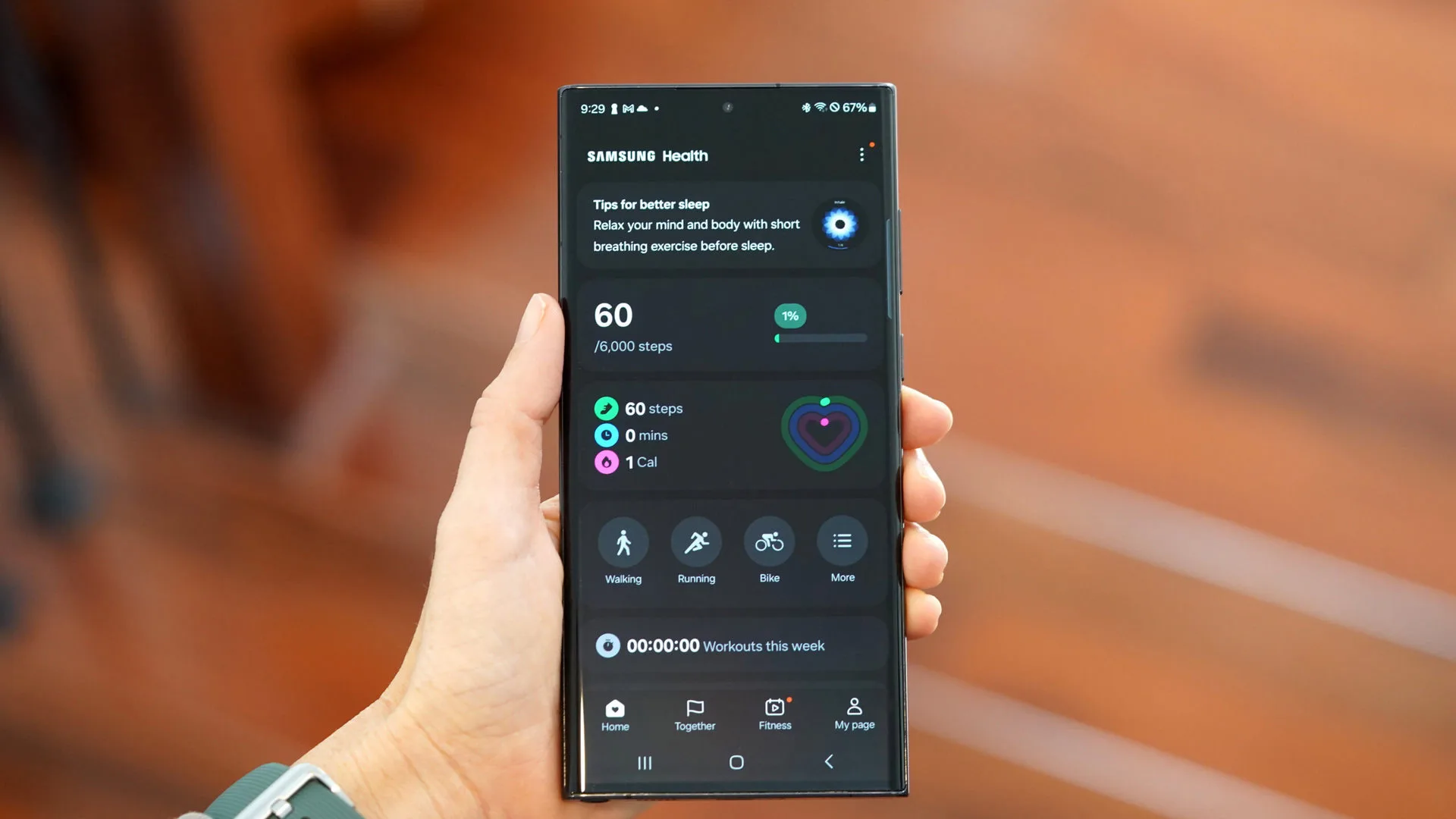
New metrics need a home, and the Samsung Health update delivers one with a full redesign of the Samsung Health app. The updated interface organises everything into five main categories: Sleep, Activity, Nutrition, Mindfulness, and Vitals. That structure should feel logical to most users and makes it easier to find what you’re looking for without digging through nested menus. The home screen will also surface wellness tips and the AI-generated Energy Score directly — a small change but one that actually improves daily usability.
Samsung is also expanding some of its more specialist existing features as part of this Samsung Health update. The Antioxidant Index will gain trend charts and historical tracking, letting users see how their levels change over time rather than just getting a point-in-time reading. The AGEs Index — which attempts to give a longer-term picture of how lifestyle choices are affecting the body at a cellular level — will now collect overnight measurements automatically. Both of these features still rely on the BioActive Sensor found on Galaxy Watch hardware, so their availability will remain limited to Samsung’s own ecosystem, but their improvement signals that Samsung is getting more serious about long-term health trend analysis rather than just daily snapshots.
New to the platform entirely is Hearing Health, which uses ambient noise measurements from the Galaxy Watch to generate personalised insights about noise exposure. It’s a smart addition to the Samsung Health update. Noise-induced hearing loss is widely underestimated as a health risk, and a wearable that can passively track your daily exposure and flag when you’re consistently in damaging sound environments fills a real gap that most health platforms ignore entirely.
The Galaxy Watch 9 Connection
Samsung was explicit in its announcement that this Samsung Health update is a preview. The company stated that “these advancements offer a glimpse into the future of Samsung Health — a future that will be fully realized with the launch of Samsung’s next generation of Galaxy Watches.” That language is deliberate marketing, timed to build anticipation for what’s expected to be a July 22 Unpacked event in London, where Samsung is widely anticipated to announce the Galaxy Watch 9, Watch 9 Classic, and a Watch Ultra 2.
The June 8 rollout of the Samsung Health update creates an interesting dynamic. Users with existing Galaxy Watch hardware will get access to some of these features immediately, but the full experience — particularly anything that relies on new sensors or upgraded processing in the Watch 9 series — will likely require the new hardware. That’s a familiar playbook in wearables: update the software platform broadly, then use new hardware to unlock its ceiling.
What Samsung hasn’t announced yet is arguably as interesting as what it has. An AI-powered fitness assistant — a chatbot capable of answering health questions and helping users track goals within the Samsung Health app — has already surfaced in app code but was notably absent from this announcement. Samsung is almost certainly holding that back for the Watch 9 launch itself, where it can anchor the AI narrative to new hardware and generate a cleaner news cycle. Given how central AI assistants have become to every major tech product launch in 2025, that reveal will likely be a centrepiece of the Unpacked keynote.
The broader picture here is Samsung taking direct aim at Apple’s dominance in health-focused wearables. Apple has spent years building a reputation for the Apple Watch as a serious health device — irregular heart rhythm notifications, crash detection, the Vitals feature in watchOS 11. Samsung has always had competitive hardware but has lagged on the software and data intelligence side. This Samsung Health update, and presumably the Galaxy Watch 9 launch that follows it, looks like the most concerted effort yet to close that gap.